


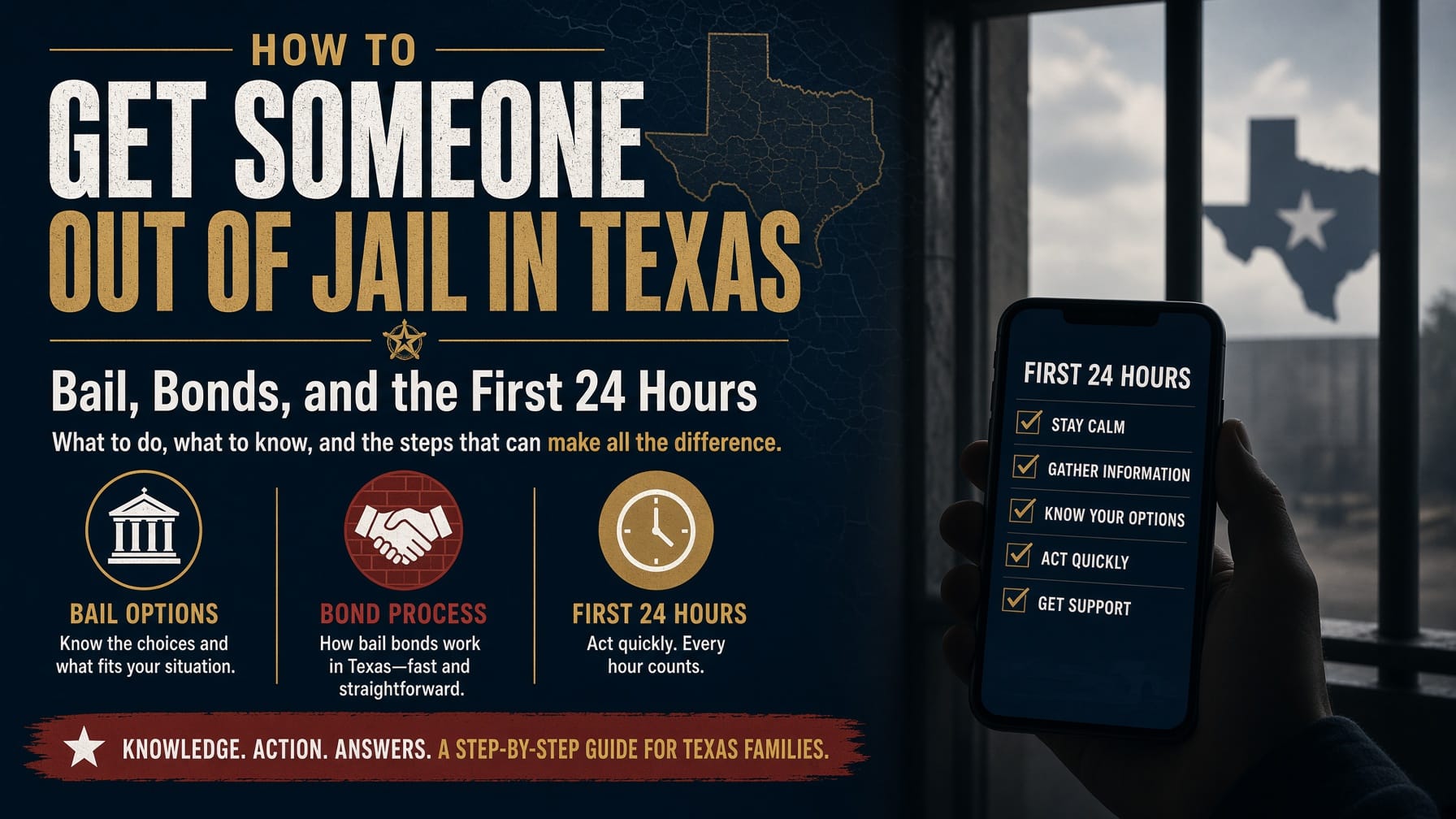
Prepared by the Heath Hyde, P.C. editorial team from information supplied by the firm · Published August 31, 2026
Quick answer: Confirm the bail amount, written conditions, and any other holds before paying. Magistration must occur without unnecessary delay and within 48 hours. The bond options and exceptions below explain why payment may not produce immediate release.
You do not have to make a financial commitment during the first call. Write down what you are told, then check it with the jail. A relative may know the new charge but not realize that a different agency has also placed a hold.
This guide focuses on bail and the steps that can lead to release. If you are still trying to locate the person or confirm what happened, begin with our guide to what happens when a family member is arrested, then return here once you have the basic details.
Write these five things down before you do anything else
Before contacting a bondsman, collect the details below. They help you confirm that you have the right person and ask the jail or lawyer specific questions:
- The full legal name and date of birth of the person arrested. Jail rosters are searched by name and date of birth, and a nickname will not find them.
- Which agency arrested them and which jail they are in. A city police arrest usually still ends up in the county jail, but not always immediately.
- The charge or charges as written, not as summarised. “Assault” and “aggravated assault” are different offences with very different bail consequences.
- The booking number. Bondsmen and the jail will both ask for it.
- Whether there is a hold. Ask directly: “Is there a hold on this person?” That one question predicts more about release timing than the bail amount does.
Magistration: the hearing that sets bail
Article 15.17 of the Texas Code of Criminal Procedure requires a person who has been arrested to be taken before a magistrate without unnecessary delay and no later than 48 hours after arrest. This appearance is commonly called magistration. It may last only a few minutes and is often held by video from the jail.
At magistration the magistrate must:
- inform the person of the accusation against them;
- inform them of the right to retain counsel, the right to remain silent, the right to have an attorney present during any interview, the right to terminate an interview at any time, and the right to an examining trial;
- inform them of the right to request appointed counsel if they cannot afford a lawyer, and give a reasonable opportunity to request it; and
- set bail, unless the offence is one for which bail may be denied.
Do not mistake this appearance for a decision that the person committed the crime. Ask for the bail amount and the written release conditions. You will need both before deciding how to arrange a bond.
A separate rule for certain warrantless arrests
Article 17.033 concerns warrantless arrests followed by jail detention without a probable-cause finding. For a misdemeanor, the release-on-bond deadline is 24 hours and the cap is $5,000. For a felony, those figures are 48 hours and $10,000. The exceptions are discussed next. Without access to a surety or enough cash to deposit the bond, the person must receive a personal bond under this provision. Counsel should check both this rule and the separate Article 15.17 appearance deadline.
Article 17.033 also allows a magistrate, on an application by the prosecutor stating why probable cause has not been determined, to postpone release for no more than 72 hours after arrest. If the person is taken to a hospital, clinic, or other medical facility before magistration, the statute’s 24- or 48-hour clock starts when a medical professional releases the person, as documented by that facility. Ask a lawyer to review how these rules apply to the arrest and timeline.

How a Texas magistrate decides the number
Under Article 17.15, the court considers more than the family’s bank balance. These rules guide the decision:
- Bail must be high enough to give reasonable assurance that the person will appear in court.
- Bail must not be used as an instrument of oppression.
- The nature of the offence and the circumstances of the alleged offence are considered.
- The person’s ability to make bail is considered — and proof of inability to pay a particular amount does not, on its own, control the outcome.
- The future safety of the alleged victim, law enforcement, and the community is considered.
- The person’s criminal history is considered.
Senate Bill 6 of 2021 introduced the Public Safety Report System among other bail changes. Under current law, a magistrate generally must obtain and consider a public safety report before setting bail for a Class B misdemeanor or more serious charge, subject to statutory exceptions. The report includes a criminal-history summary and information about personal-bond eligibility.
Current personal-bond limits appear in Article 17.03 and depend on the charge and circumstances. That article includes express exceptions, including Article 17.033. A lawyer can assess whether a personal bond is available in a particular case.
The four ways out
Cash bond
With a cash bond, you pay the full amount to the county. If the person makes the required court appearances and follows the bond conditions, the county generally returns the money when the case ends, less any permitted fees. This option requires the largest payment at the outset, but some or all of that payment may be returned.
Surety bond through a bail bondsman
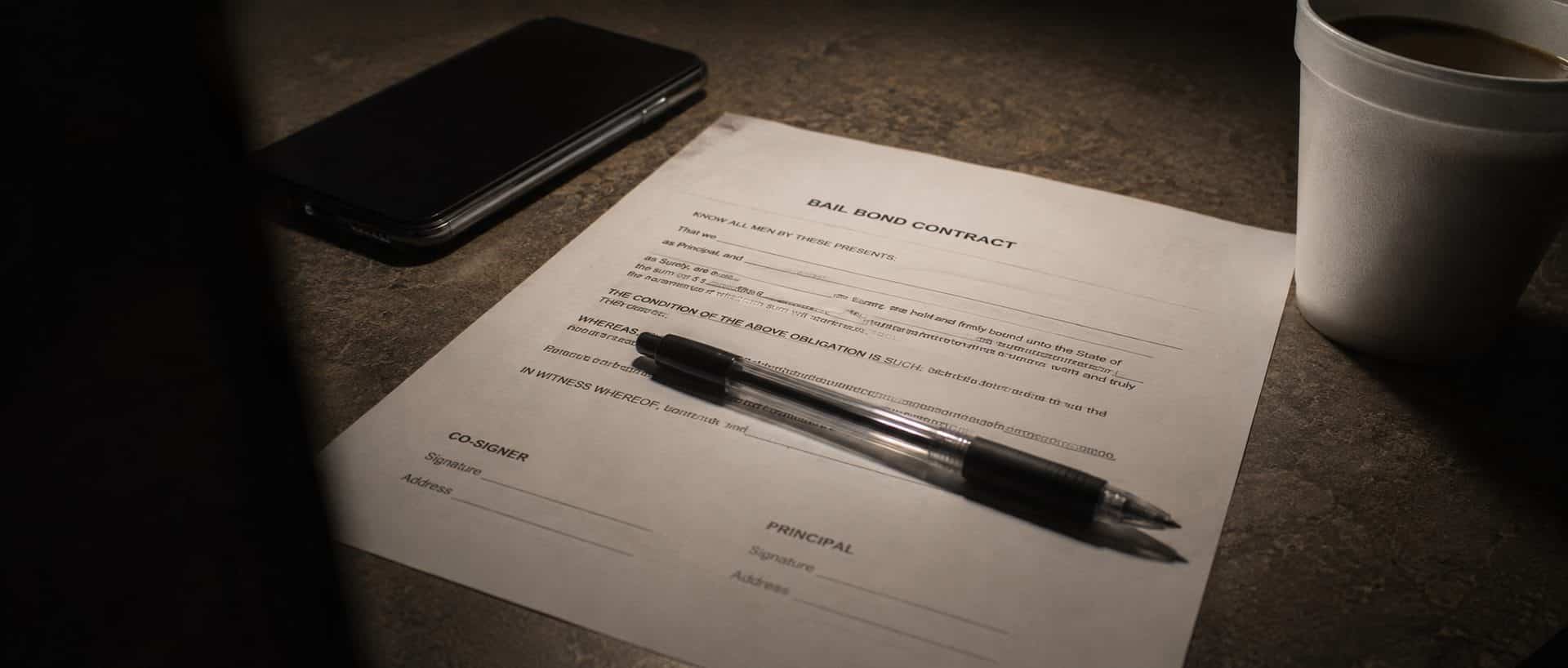
Check the contract rather than budgeting from an advertised percentage. Premiums commonly run 10–15% and generally remain nonrefundable after dismissal or acquittal. What collateral are you pledging? What could you owe as a co-signer after a missed appearance? Get those answers before signing.
Personal bond
Also called a PR bond. No money is paid up front; the person signs a written promise to appear and to comply with conditions, and becomes liable for the amount only if they fail to appear. There may still be an administrative fee. As noted above, availability narrowed considerably after 2021.
Attorney bond
Texas permits a licensed attorney to act as surety in some circumstances. Some counties allow it and others effectively do not. Where it is available it can fold the bond and the representation into one relationship. Whether it is possible in a particular county on a particular charge is a question for a lawyer who practises there.
Check for holds before arranging pickup
Call for release confirmation before setting off. The jail may still need to address:
- Another county’s hold. Ask who placed it and pass that detail to counsel. A transfer may come before any release home.
- A probation or parole detainer. If the person is on community supervision or parole, a new arrest can trigger a hold that bail on the new charge does not touch.
- An immigration detainer. This carries consequences well beyond the criminal case and should be discussed with a lawyer before any bond is posted.
- Timing. An arrest late on a Friday, at a weekend, or before a holiday can mean waiting for the next magistration setting.
- Medical clearance or intoxication. Jails will generally not release someone who is not medically stable or is still intoxicated.
- Release paperwork. The jail still has to process the release after payment. Ask for an update before making repeated trips; there is no reliable minute-by-minute estimate for every facility.
When the bail amount is too high
If the amount is beyond reach, ask counsel about a reduction motion or an appropriate habeas request. Supply records of income, housing, dependents, and available funds. The allegation and other bail factors still matter.
Bring counsel something the court can evaluate: pay records, a lease, or information about the people who depend on your relative. A witness may also be useful. The lawyer can decide what to present, but filing the request does not guarantee a lower amount.
Five things not to do in the first 24 hours
- Do not discuss the facts of the case on a jail phone call. Calls from a county jail are recorded, and prosecutors do listen to them. This is covered in detail in the guide to the weeks that follow.
- Do not post about it. Social media posts by family members have been used as evidence, and they reach the alleged victim and the community faster than you expect.
- Do not let anyone give a statement to investigators to “clear things up”. That includes you.
- Do not sign a bond contract you have not read. Co-signers regularly do not understand what they have guaranteed until something goes wrong.
- Do not contact the alleged victim. If a no-contact condition exists, a well-meant message from a relative can put the person straight back in custody.
When to call a lawyer before posting bond
Some families post a misdemeanor bond before retaining a lawyer. It is worth getting legal advice before committing the money when there is more to resolve, such as:
- the charge is a felony, particularly a violent or sexual offence;
- the bail amount is high enough that a bondsman’s fee would consume money you will later need for the defence;
- there is a hold, a detainer, or an immigration issue;
- the person was on probation, parole, or bond for another case;
- investigators are asking to interview the person;
- the case is federal — federal detention works differently and there is no bail bondsman system in federal court.
Heath Hyde has tried more than 400 state and federal jury trials and handled more than 100 murder cases. The firm takes bond-related calls around the clock. A lawyer can review the charge, bond terms, and any holds before you decide what to do next.
Frequently asked questions
How long does it take to get someone out of jail in Texas?
Once bail is set and a bond is posted, release processing commonly takes several hours. The overall timeline depends on how quickly the person sees a magistrate — which must happen within 48 hours of arrest — and whether any hold or detainer exists. A weekend or holiday arrest usually adds time.
How much does a bail bondsman cost in Texas?
Bondsmen commonly charge in the range of 10–15% of the bail amount, though the figure varies by county and by the individual bondsman. The fee is not refundable. It is not returned if the charges are dropped or the person is found not guilty.
What is the difference between bail and a bond?
Bail is the amount the court sets as the condition of release. A bond is the mechanism used to satisfy it — cash paid to the county, a surety bond written by a bondsman, a personal bond, or an attorney bond.
Can bail be denied entirely in Texas?
In most cases bail must be set. Texas law provides limited circumstances in which bail may be denied, including certain capital cases and some situations involving repeat felony offences or violations of bond conditions. If you are told no bond is being set, involve a lawyer immediately.
What is a personal bond and who qualifies?
A personal bond releases someone on a written promise to appear rather than payment of a surety or cash bond. Current law has charge- and circumstance-specific limits, as well as statutory exceptions. A lawyer can review whether a personal bond is available in the case.
Do I get my money back after the case is over?
If you posted a cash bond and the person complied with all conditions and appearances, the money is generally returned at the end of the case, less fees the county may deduct. A bondsman’s fee is never returned.
What happens if the person misses a court date?
The court can forfeit the bond and issue a warrant. A cash bond can be lost, and the surety who wrote the bond — along with any co-signer — can be pursued for the full amount. If a court date is missed, contact a lawyer the same day rather than waiting.
Can bond conditions be changed?
Tell your lawyer exactly which restriction is causing difficulty and bring proof of the conflict. Counsel can request a change by motion. Until the court acts, the existing condition remains in force—even if everyone expects the request to be granted.
Should I hire a lawyer before or after posting bond?
For a minor charge with no complications, most families post first. For a felony, a high bail amount, any hold or detainer, or a case where investigators want an interview, speak to a lawyer before spending money on a bond — that fee is gone permanently, and it may be needed for the defence.
Does federal court work the same way?
No. There is no bail bondsman system in federal court. Release is decided at a detention hearing under the federal Bail Reform Act, and in certain categories of case there is a presumption in favour of detention. A federal arrest should be treated as urgent. See federal criminal defense.
Family resources: Find family guides, facility directories, and support links in the Family Member Information Hub.
For the person outside: Read how to cope when someone you love is in jail for practical ways to manage daily responsibilities and find support.
Where to go next
- What happens when a family member is arrested in Texas
- When someone you love is in jail: the weeks that follow
- How to find, visit, and support someone in a Texas prison or jail
- What a criminal defense lawyer costs in East Texas
- East Texas criminal defense knowledge hub
This is general information about Texas procedure. For advice about an arrest, take the paperwork and release conditions to a criminal defense lawyer. The facts and local practices matter.