
Bank Fraud · State and Federal
Can Texas Prosecute Conduct Called Bank Fraud Federally?
A federal bank-fraud investigation does not decide whether Texas can charge a separate state offense. The statutes and required proof may differ.
Eligible to Practice in Texas
Attorney at Law
Bar Card Number: 00796807
TX License Date: 11/01/1996
214 Connally St Ste A
Sulphur Spgs, TX 75482-2612
Direct answer: Texas may prosecute conduct that satisfies an applicable Texas offense even when federal authorities investigate it as bank fraud. Federal bank fraud under 18 U.S.C. § 1344 and Texas offenses do not have identical elements. The name used to describe conduct is not a substitute for reading the actual charging instrument and statute.
Start with the statute actually charged
Section 1344 covers knowingly carrying out, or attempting, either of two schemes: defrauding a financial institution, or using false or fraudulent pretenses to obtain property belonging to or held by one. A Texas prosecutor has to identify an applicable state offense instead of simply borrowing that federal label. Depending on the allegation, that could be theft, forgery, credit-card abuse, a materially false written credit statement, misapplication of fiduciary or financial-institution property, or fraudulent use of identifying information. Each provision has its own requirements.
Those labels are not interchangeable. Texas theft under § 31.03 focuses on unlawful appropriation and intent to deprive an owner. Other provisions address particular writings, credit transactions, statements, fiduciary duties or identifying information. Whether any statute applies depends on its text, the alleged conduct, the property and the required mental state. A false loan statement, forged check and employee’s handling of a bank account do not automatically present the same offense.
Compare the cases without blending them
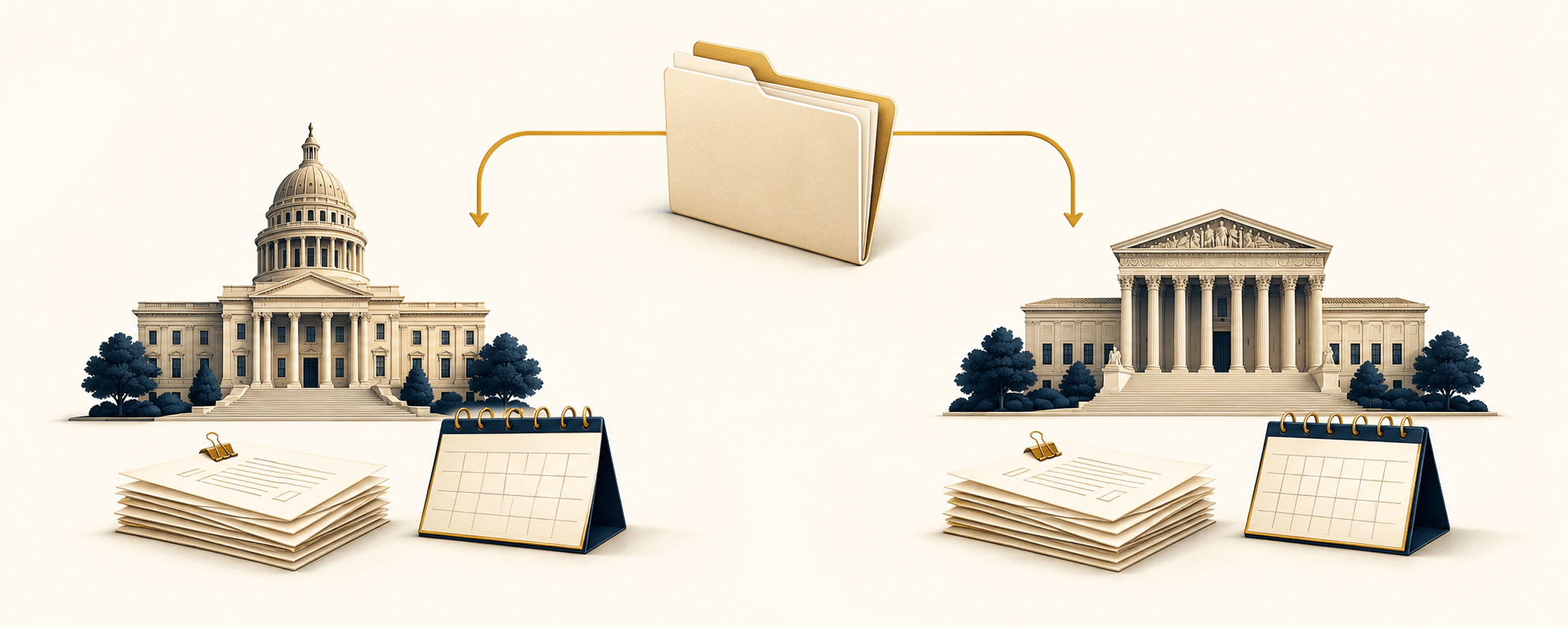
Make a separate chart for each investigation: sovereign, prosecutor, statute, alleged act, property owner, required mental state, charging document, deadline, procedure and possible consequences. The federal financial-institution requirement under § 1344 is not automatically an element of a Texas theft charge; a state statute may instead focus on appropriation, value, a particular instrument or another specified fact.
Use the Texas law in effect on the offense date to check grading and value thresholds. The federal maximum under § 1344 does not supply that answer.
Keep a calendar for each case, including its deadlines and disclosure rules.
What will the agreement resolve?
Before making a statement or entering a plea, ask counsel what exposure remains in each case. An admission can have consequences in the other proceeding.
Read the proposed agreement for its scope and check who has authority to bind each prosecutor. Resolving one case does not automatically resolve the other.
Preserve the records underlying each allegation, including applications, account statements, bank notices, messages and any charging or seizure papers. The right analysis depends on the statutes, facts, forum and stage of the case; counsel can identify which rules apply to each allegation.
Use the Federal Bank Fraud Defense in Texas knowledge hub for the wider investigation and trial process.
Primary legal sources
- 18 U.S.C. § 1344 (federal bank fraud).
- Texas Penal Code Chapter 31, including § 31.03 (theft).
- Texas Penal Code Chapter 32, including §§ 32.21, 32.31, 32.32, 32.45 and 32.51.
To discuss representation, contact Heath Hyde or call 903-439-0000. Representation begins only after the firm agrees to take the matter.