
What Should Never Be Discussed on a Jail Call?
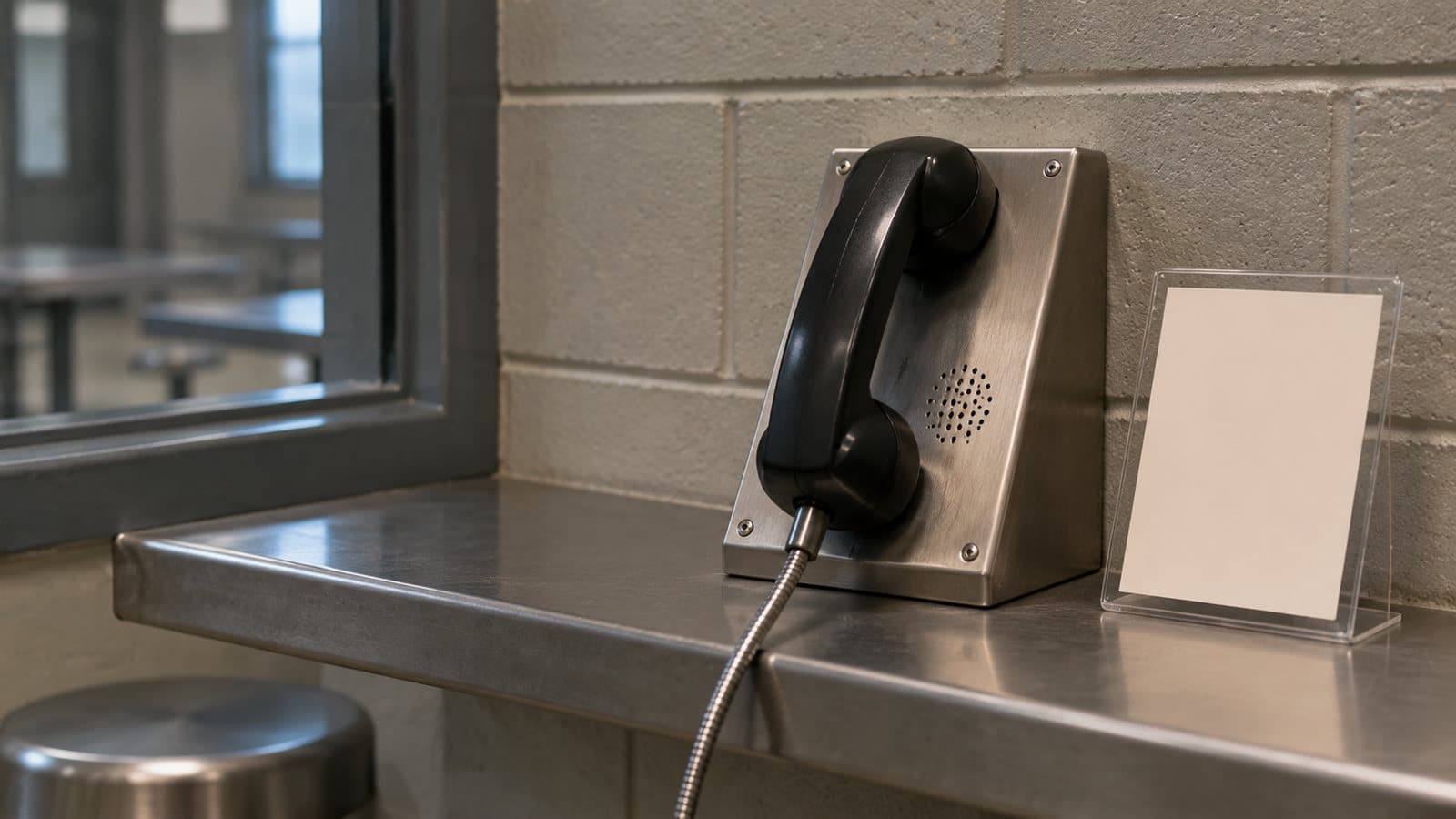
Jail calls are recorded, and the State can play your loved one’s own words to a jury. Keep the case off the phone and save it for the lawyer.
Mr. Heath Enix ‘Heath’ Hyde
Eligible to Practice in Texas
Attorney at Law
Bar Card Number: 00796807
TX License Date: 11/01/1996
Primary Practice Location: Dallas, Texas
Return to the Texas Murder Trial Defense Knowledge Hub
Short answer
The jail records the call, and the State can play it at trial in his own voice. Use the call for the kids, the commissary account, and visiting days. The case goes to the lawyer.
| Never on a jail call | Fine on a jail call |
|---|---|
| What happened that night, even a denial | How the kids are doing |
| Where anyone was, or an alibi | Money on the books |
| What a witness saw or “should” say | Visiting times and approved visitors |
| What the lawyer advised | The next court date you already know |
What to do now: Tell every relative who takes calls, starting today, that the case stays off the phone.
Why is a jail call so risky?
Bexar County tells clients that all phone calls are recorded and every non-attorney communication is monitored. Treat every ordinary call the same way.
Under Texas Rule of Evidence 801(e)(2)(A), a party’s own statement offered against that party isn’t hearsay. That rule doesn’t make every call admissible, and the defense can still raise other objections. Don’t count on those objections, though.
| Line on the call | How the State might use it |
|---|---|
| “I wasn’t even there, I was at Mike’s.” | Locks in an alibi nobody has checked |
| “Tell Danny he didn’t see anything.” | Looks like influencing a witness |
| “I was just scared, I didn’t mean to.” | Argued as an admission about intent |
| “Did they find the bag in the truck?” | Links him to an item police want |
Which topics cause the most trouble?
Say your son calls at 9:30 p.m. and asks, “What if I’d just stayed home?” Even a “what if” question can end up in front of a jury. Jokes and guesses count, too.
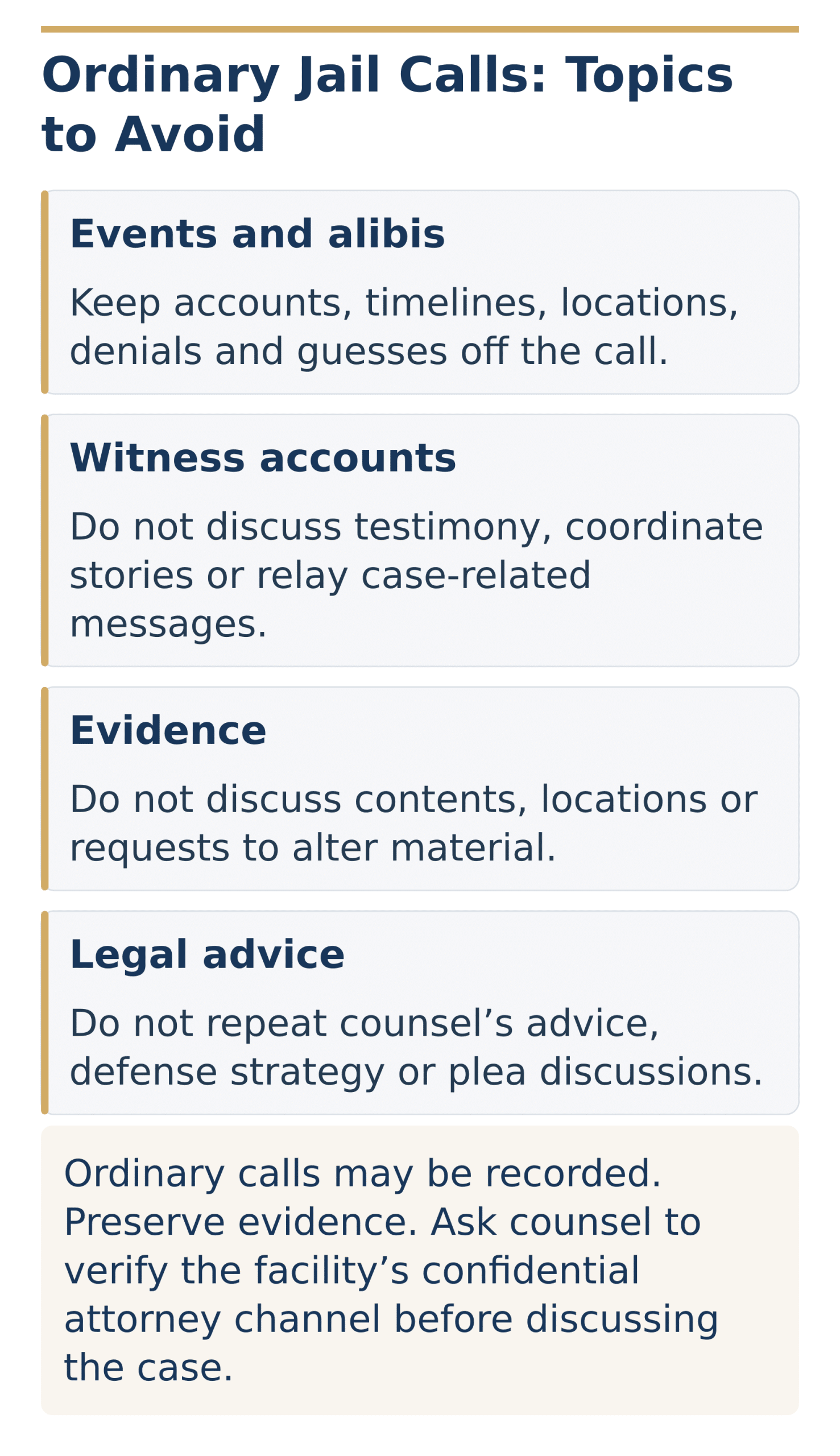
Four topics do most of the damage:
- the events: times, places, weapons, who was there, and why
- witnesses: what anyone saw or will say
- evidence: where a phone or a car is
- the lawyer’s strategy and any plea talk
Even a denial can hurt. A detailed denial can clash with phone records or video the defense hasn’t seen yet. Our guide on how an alibi can be preserved and tested explains why the lawyer checks an alibi first.
How one denial backfired in a hypothetical case:
- 7:12 p.m. call: “I left Mike’s at ten, I swear.”
- Cell records: his phone near the scene at 10:20.
- Trial: the State plays the 7:12 call to show he lied, and the real alibi gets harder to raise.
When the case comes up, swap the risky line for a safe one.
| Instead of saying this | Say this |
|---|---|
| “Let me tell you what really happened.” | “I’ll talk to my lawyer about that.” |
| “Ask Keisha what she told the cops.” | “Give my lawyer Keisha’s number.” |
| “Get rid of my old phone.” | “Tell my lawyer where my old phone is.” |
Can a jail call create a new charge?
It can. Say a relative on the line gets asked to “clean up” a phone. Asking someone to influence a witness or get rid of evidence can be its own crime.
| Statute | What it covers |
|---|---|
| Penal Code §36.05 | A benefit or coercion to make a witness lie, stay silent, or dodge a subpoena |
| Penal Code §37.09 | Altering, destroying, or concealing evidence during a known investigation |
| Penal Code §37.09(c) | Third-degree felony, or second-degree for a human corpse |
Now the relative who picked up is in the middle of it. Your cousin only meant to help, but the request came through a recorded line with his name on the visitor list. He shouldn’t touch that phone, and he shouldn’t promise anything to anyone.
If a risky call already happened, tell the lawyer the date and time. Don’t call back to explain it, because the second call is recorded too. If a relative was asked to “clean up” a phone, nobody should touch the phone.
How should the lawyer and client talk?
Brazoria County, for example, requires attorneys to create an account for its privileged communications service. The lawyer sets up that channel, and the family stays out of it.
Brazoria says it doesn’t intentionally monitor privileged communications. That’s one jail’s policy. Ask the lawyer to confirm the rules where your loved one is held.
Say your son wants to tell his lawyer something urgent on a Friday night. He should wait for the approved attorney line or the next legal visit. He shouldn’t tell you so you can pass it on Monday morning.
An unregistered lawyer’s number may go through the same recorded system as family calls. Rules for in-person attorney visits vary by facility, too.
Don’t relay the lawyer’s advice, either. Privilege covers confidential communications, and passing them along to others can waive it under TRE 511.
What can a family do before the next call comes in?
Maybe your grandmother answers every call because she’s home all day. Maybe she’s the one most likely to ask, “Baby, what happened?”
Set up these four things:
- A short list of safe topics by the phone
- The lawyer’s number, for when the case comes up
- A note of the date and time of any risky call
- One relative who updates the lawyer each week
Then let the lawyer handle the case, and keep the calls about family.
Frequently asked questions
Is a call to the lawyer’s office always private?
Not automatically. Ask the lawyer how the facility handles attorney calls and which number to use.
Can we talk about the case in code?
Prosecutors and jurors can still hear the call, and code words can sound worse than plain speech.
Are video visits and messages recorded too?
They can be. Bexar County says it watches video conferences and reads mail, so treat them like phone calls.
What if my loved one keeps bringing up the case?
Say you can’t talk about it, and end the call if you need to. Then tell the lawyer.
Talk with Heath Hyde
If someone you love is in jail on a murder charge, protect the case by keeping it off the phone. Call Heath Hyde, P.C. at 903.439.0000 or request a free consultation. You can also read the Texas family arrest guide and the family resources page.
Legal sources
- Tex. R. Evid. 503, 511, 801(e)(2)
- Tex. Penal Code §36.05
- Tex. Penal Code §37.09
- Bexar County: Information for clients
- Brazoria County: Attorney phone information
This article provides general educational information, not legal advice. Every case depends on its facts, evidence, court, deadlines and governing law. Past results do not guarantee a similar outcome.