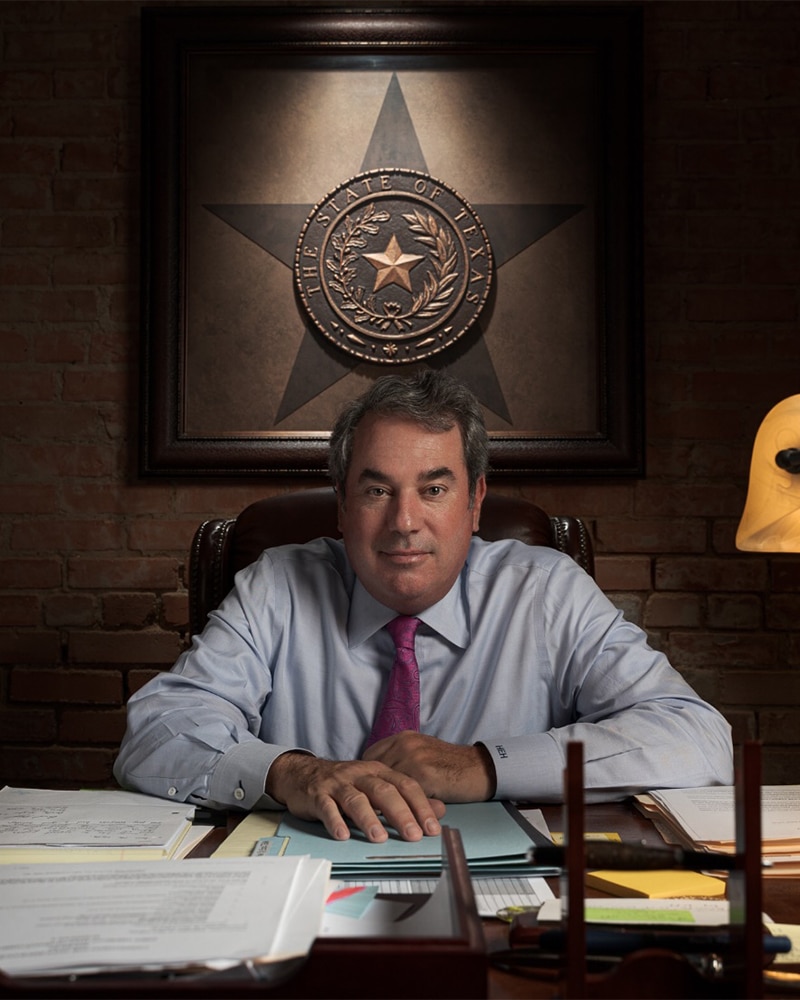


Prepared by the Heath Hyde, P.C. editorial team from information supplied by the firm · Published August 25, 2026 · Updated August 31, 2026
Quick answer: A top murder defense lawyer in East Texas should have verifiable first-chair murder-trial experience, command of Texas homicide and self-defense law, skill in voir dire and cross-examination, the ability to challenge forensic and digital evidence, access to capable investigators and experts, and the judgment to know when to negotiate and when to try the case. No official Texas title designates anyone the “top” murder lawyer, and no lawyer can ethically guarantee a result.
A murder arrest throws a family into unfamiliar territory almost overnight. One day, life is moving along normally. The next, someone is in jail, detectives are calling, phones are being searched, and television or social media reports may be repeating the prosecution’s side of the story as though the case has already been decided.
In the middle of that confusion, the family has to choose a lawyer.
That decision is too important to base on a slogan, an online advertisement, or who answers the telephone first. Every criminal defense website uses words such as “aggressive,” “experienced,” and “proven.” Those descriptions may sound reassuring, but they do not tell you whether the lawyer has ever stood in front of a jury and defended someone accused of taking another person’s life.
Being considered a top murder defense lawyer in East Texas should require substantial first-chair murder-trial experience, a command of Texas homicide and self-defense law, skill in voir dire and cross-examination, the ability to understand and challenge forensic evidence, and the judgment to know when to negotiate and when to try the case. The lawyer should also know the courts and communities of East Texas, have access to capable investigators and experts, and be willing to tell the client the truth, even when it is difficult.
I spent more than ten years prosecuting criminal cases in Dallas County before becoming a criminal defense lawyer. During my career, I have tried more than 400 cases before state and federal juries, including more than 100 murder cases. If those years have taught me anything, it is that a reputation in murder defense isn’t built through advertising.
It is earned in court, one case at a time.
There Is No Official Title of “Top Murder Lawyer”
No Texas agency publishes a list of the best murder lawyers in East Texas. No government-issued credential officially identifies someone as a “top murder attorney” or “murder specialist.”
Attorney advertising often outpaces reality. Texas rules prohibit false or misleading advertising and regulate claims about an attorney’s specialization and certifications. The State Bar of Texas advertising rules explain the requirements that apply when lawyers describe their qualifications.
When people ask what makes someone a top murder lawyer, they are usually asking a practical question, not looking for an official title. They want to know what separates a lawyer who handles criminal cases from one who is genuinely prepared to defend a homicide prosecution.
The answer should begin with facts that can be checked:
- How many jury trials has the lawyer personally handled?
- How many of those were murder trials?
- Did the lawyer serve as lead counsel?
- Has the lawyer handled cases involving forensic and medical evidence?
- Does the lawyer regularly appear in the county where the charge is pending?
- Who will actually prepare and try the case?
Awards, rankings, and online reviews may provide background. They are not substitutes for courtroom work.
Ask How Many Murder Cases the Lawyer Has Actually Tried
The first question I would ask a lawyer being considered for a murder case is simple: how many murder cases have you personally tried before a jury?
Listen carefully to the answer.
There is a difference between handling a murder case and trying one. A case may be negotiated, dismissed before trial, or resolved through a plea. Those outcomes can require good lawyering, but they do not provide the same experience as selecting a jury, examining witnesses, contesting scientific evidence, arguing the court’s charge, and waiting beside a client for the verdict.
There is also a difference between assisting on a trial and being responsible for it.
A lawyer may have practiced criminal law for 20 or 30 years without trying many murder cases. Another may have handled thousands of files but rarely served as lead counsel in a serious felony trial. Time in practice matters, but the calendar does not cross-examine a witness or make decisions at counsel table.
Murder trials force a lawyer to make judgment calls that cannot be rehearsed completely in advance. Should the defense give its opening statement immediately, or wait until the State rests? Is a particular witness mistaken, dishonest, frightened, or trying to protect someone? Will an expert help the jury understand the evidence, or give the prosecution another witness to attack? Should the accused testify? Does the evidence support self-defense? Is a lesser-included offense appropriate? What should the jury be told about punishment?
Some of those decisions must be made in minutes.
Legal education teaches the rules. Trial experience teaches a lawyer how those rules behave when witnesses are unpredictable, evidence develops differently than expected, and twelve jurors are watching every move.
A murder case is no place for a lawyer to learn how to try one.
Experience on the Prosecution Side Can Matter
My years in the Dallas County District Attorney’s Office still influence how I review a criminal case.
That does not mean a former prosecutor receives favors or special treatment. He should not. It means he has seen how the State builds a case from the inside.
Prosecutors usually develop a theory early. Once that theory begins to take shape, witnesses, photographs, statements, physical evidence, and expert opinions are organized around it. Investigators naturally look for evidence that helps explain what they believe happened.
Investigators typically try to do their jobs honestly. But a theory can create tunnel vision, and that tunnel vision can subtly taint how evidence is gathered and read. Evidence that supports the theory receives attention. Evidence that complicates it may be discounted, misunderstood, or never pursued.
By the time the defense receives the file, the case may look complete. It seldom is.
The defense lawyer has to ask different questions. Which witness changed his account? Who was interviewed with other witnesses present? Was nearby video collected before it was overwritten? Does cellphone information really establish the location claimed by the State? Was an alleged confession obtained legally and recorded in full? Is an accomplice expecting leniency? Does the medical evidence fit the prosecution’s timeline? Was information supporting self-defense taken seriously?
Sometimes the most important part of the defense is found in something the official investigation never examined.
Having prosecuted serious cases helps me recognize how the State is likely to arrange its proof. It also helps me identify the assumptions holding that arrangement together.
A Murder Lawyer Must Know More Than the Name of the Charge
Texas homicide law is not as simple as asking whether someone caused another person’s death.
Under Texas Penal Code §19.02, the State can allege murder under several theories. It may claim the accused intentionally or knowingly caused a death. It may allege that the person intended to cause serious bodily injury and committed an act clearly dangerous to human life. It may also pursue a felony-murder theory based on a death allegedly caused during the commission or attempted commission of another felony.
Texas Penal Code §19.03 governs capital murder. The statute applies when the State alleges murder together with one of the specifically defined circumstances that elevate the charge, including certain deaths occurring during kidnapping, burglary, robbery, aggravated sexual assault, arson, obstruction, or retaliation. The statute also addresses murder for remuneration, multiple victims, certain child victims, and other defined situations.
Texas murder cases are unusually complex. Intent may be the central question in one case. Identity may control another. A third may turn on self-defense, the law of parties, causation, or whether the State can prove the felony it says led to the death.
The lawyer has to think about the jury instructions from the beginning. Waiting until the testimony is finished is too late. The investigation, cross-examination, expert analysis, and defense presentation should all be conducted with the likely jury charge in mind.
A few lines in that charge may determine what choices are available when the jury begins deliberating.
The Defense Cannot Always Wait for an Indictment
Families often assume that the real legal work begins at the first court appearance. In a murder investigation, waiting can cost the defense evidence that will never be recovered.
Critical evidence that helps the defendant can disappear quickly without proper preservation. Surveillance systems overwrite recordings. Cellphones are lost, replaced, or damaged. Vehicles are repaired. Weather changes a scene. Witnesses discuss the event with one another, and their memories begin to merge. Social media posts disappear. News reports influence what people think they remember.
Early representation may allow the defense to preserve evidence before it is lost. I wrote in more detail about that window in Charged With Murder in East Texas: The First 48 Hours Decide Everything.
Depending on the facts, the lawyer may need to notify detectives that the accused is represented, prevent an unnecessary interview, locate witnesses, photograph the scene, secure video, preserve electronic records, obtain medical information, or arrange for an expert to examine physical evidence.
A bond hearing may require immediate preparation. In some cases, information should be presented before indictment. In others, disclosing the defense too early would be a mistake.
That choice requires judgment. Moving quickly does not mean moving carelessly.
The defense should not assume the police report contains everything worth knowing. A police investigation is conducted for the government. A defense investigation must be conducted for the accused.
Scientific Evidence Is Not Beyond Question
The word “forensic” carries weight with jurors. They have watched television programs in which science produces a clear answer before the final commercial break.
Real cases are rarely that tidy.
A murder prosecution may involve a medical examiner, DNA analyst, firearms examiner, toxicologist, crime-scene investigator, digital-forensics specialist, or cellphone-location witness. Their work can be important and sometimes highly persuasive. It is not automatically correct simply because it is presented as science.
The defense must look beneath the prosecution’s conclusions.
Was the evidence collected correctly and legally? Who handled it? Was it packaged and stored properly? Did the laboratory follow its own procedures? Is the analyst stating what the test actually established, or going further? Could DNA have arrived through secondary transfer? Does cellphone evidence place a person at one precise spot, or only within a broad service area? Does a firearm examiner’s opinion exclude every other weapon? Does the medical evidence establish intent, or merely describe an injury?
The lawyer does not need to pretend to be a pathologist, geneticist, or engineer. He does need to understand the issue well enough to recognize when outside help is required.
He must be able to locate the right expert, ask the right questions, understand the answer, and translate a technical weakness into language a jury can follow.
An expert with an impressive résumé is not helpful if the lawyer cannot connect the science to the disputed issue in the case.
Cross-Examination Is Not a Contest to See Who Can Be the Loudest
Television cross-examinations usually end with a witness breaking down and admitting the truth. That rarely happens in a real courtroom.
Good cross-examination is controlled. The lawyer knows where he is going and why he is asking each question.
Murder trials present very different kinds of witnesses. A frightened eyewitness should not necessarily be questioned in the same manner as a cooperating accomplice. A medical examiner calls for a different approach than a jailhouse informant. A grieving relative may provide testimony that must be challenged, but an unnecessarily harsh tone can cause jurors to stop listening to the lawyer and begin protecting the witness.
The object is not to defeat the witness in an argument.
The object is to expose an inconsistency, reveal a motive, establish a missing fact, limit an opinion, or show the jury why a particular part of the State’s case should not be accepted without question.
Sometimes the strongest cross-examination lasts ten minutes. Sometimes it takes a day. Experience helps the lawyer know which is which.
Voir Dire Is Where the Trial Truly Begins
Jury selection in Texas is commonly called voir dire. The term refers to the questioning of prospective jurors before the jury is chosen.
I consider voir dire one of the most important parts of a murder trial. It is also one of the easiest parts to mishandle.
Jurors do not enter the courthouse as blank sheets of paper. They arrive with experiences, loyalties, fears, and opinions. Some have relatives in law enforcement. Some have lost someone to violence. Some have used a firearm in self-defense or believe they could never do so. Some place great faith in scientific evidence. Others distrust the government. Many believe an innocent person would want to testify.
Most prospective jurors sincerely believe they can be fair. Asking, “Can everybody be fair?” accomplishes very little. Nearly every hand will go up.
The real work is learning what fairness means to each person.
Is a juror capable of presuming the accused innocent even after hearing the word “murder”? Can that juror actually require the State to prove every element beyond a reasonable doubt? Will the juror treat an indictment as nothing more than an accusation? Can the juror respect the accused’s right not to testify, or will silence feel like guilt? Can the juror evaluate police officers and forensic witnesses by the same standards as everyone else?
Those questions have to be asked in a way that encourages honesty.
A lawyer who lectures the panel learns very little. A lawyer who makes people feel embarrassed about their beliefs will receive socially acceptable answers instead of truthful ones. Voir dire works best as a conversation. Jurors must understand that there is no shame in admitting that a personal experience or deeply held belief would make a particular case difficult for them.
Voir Dire Must Fit the Case
I do not believe in using one jury-selection script for every murder trial.
A self-defense case may require a careful discussion about firearms, apparent danger, reasonable belief, and whether jurors think a person should have retreated. A case based on accomplice testimony may call for questions about immunity, favorable treatment, and whether someone would lie to avoid prison.
If the State relies heavily on DNA, ballistics, or cellphone records, the lawyer needs to learn whether prospective jurors regard anything labeled “scientific” as automatically reliable. A case involving an alleged confession may require a discussion about interrogation methods and whether an innocent, exhausted, frightened, or mentally impaired person could make an inaccurate statement.
The lawyer must know the evidence before jury selection begins. Otherwise, he will not know which attitudes could become dangerous after the jury is sworn.
Challenges for Cause Require Careful Questioning
Voir dire also creates the record used to challenge prospective jurors.
A challenge for cause asks the judge to excuse someone whose bias, prejudice, or inability to follow the law prevents fair service. A person who cannot honor the presumption of innocence or who would hold the defendant’s silence against him may be subject to such a challenge, depending on the full examination and applicable law.
A lawyer cannot simply announce that a juror seems unfair. The issue must be developed with clear questions. The juror must be allowed to explain the belief and whether it can genuinely be set aside.
If the judge denies the challenge, the lawyer must understand the additional steps required to preserve the complaint for appellate review. That work is technical, but the consequence is practical: an objection not properly preserved may be lost later.
The parties also receive a limited number of peremptory challenges, subject to constitutional restrictions against unlawful discrimination. Because the number is limited, every strike matters.
A prospective juror may give one answer that appears favorable and another that raises concern. The lawyer must listen to the entire conversation, watch how the person responds to other jurors, and compare that person with everyone else who may reach the jury box.
There is no perfect jury — only informed decisions made with limited information and limited time.
The Prosecutor Is Studying the Panel Too
While the defense is deciding who may be unable to honor the presumption of innocence, the prosecution is conducting its own evaluation.
Prosecutors frequently look and listen for jurors who trust law enforcement, respond strongly to the alleged facts, or appear comfortable with the State’s theory. They also look for jurors who may be skeptical of government evidence or unusually demanding about proof beyond a reasonable doubt.
I have conducted voir dire from both sides of the courtroom. That experience does not provide a formula for predicting jurors, because no such formula exists. It does help me recognize what the prosecutor may be trying to learn and why a particular juror is receiving extra attention.
Jury selection requires a lawyer to listen, think ahead, formulate follow-up questions, watch the rest of the panel, evaluate possible challenges, and comply with the judge’s procedures at the same time.
A quiet juror may end up controlling deliberations. One unexpected answer may cause five other people to reveal beliefs they had not intended to discuss. A lawyer too committed to a prepared script may miss what is happening in the room and unknowingly allow a biased juror onto the panel.
After hundreds of trials, I have learned to listen more than I talk during the most useful parts of voir dire.
East Texas Juries Are Not All Alike
People sometimes speak of an “East Texas jury” as if every county draws the same kind of panel. That has not been my experience.
The law remains the same, but a panel in Hopkins County may not view a case the same way a panel in Smith, Gregg, Harrison, Bowie, Rusk, Cherokee, Anderson, Angelina, or Nacogdoches County would.
Communities have different relationships with law enforcement, churches, agriculture, oil and gas, manufacturing, universities, the military, and the prison system. Those experiences can influence how jurors view authority, firearms, scientific evidence, personal responsibility, and self-defense.
Local knowledge does not replace trial ability. It helps the lawyer communicate without talking down to jurors or assuming they all think alike.
By the time the jury is sworn, the people who will decide nearly every disputed issue have taken their seats. That is why a murder trial often begins to take shape during voir dire, before the first witness is called.

The Loudest Lawyer Is Not Necessarily the Strongest
Clients want a lawyer who will fight for them. They should.
But fighting does not require starting an argument every time someone enters the courtroom. Noise and progress are not the same thing.
There may be critical events in a murder case when the defense should file a motion, demand a hearing, and force the State to defend its conduct. Other times, the better course is to investigate quietly and disclose nothing until the facts are understood. Occasionally, the most useful step is confronting the prosecutor with a weakness. On another day, saying less may prevent the State from repairing that weakness.
A disciplined defense is guided by the evidence rather than the lawyer’s ego.
That discipline is especially important when discussing a possible plea. A lawyer who is afraid to try the case may recommend an agreement too quickly. A lawyer who treats every negotiation as a personal contest may reject an outcome that would protect the client from a much greater risk.
Trial experience should provide the confidence to consider both options honestly.
Preparation Changes the Way a Case Is Negotiated
Most criminal prosecutions end without a jury verdict. That does not reduce the value of a lawyer who can try the case.
Prosecutors know which defense lawyers regularly appear before juries. They also know which ones usually stop at the courthouse steps.
No lawyer’s reputation will automatically produce a dismissal or favorable offer. The prosecutor controls the State’s decisions. The judge controls the courtroom. Witnesses, evidence, and jurors remain unpredictable.
But a defense position has greater credibility when the prosecution knows the lawyer has reviewed the evidence, investigated the weaknesses, retained the necessary experts, prepared the motions, and is capable of trying the case.
The possibility of trial matters only when it is real.
Sometimes the best negotiation takes place without a raised voice. The work already completed speaks for itself.
Experts and Investigators Must Serve the Case
A serious murder defense may require an investigator, medical expert, forensic consultant, digital analyst, psychologist, mitigation specialist, or another professional.
The lawyer should have access to qualified people. That does not mean every case needs a crowded defense table or an unlimited budget.
Retain an expert to answer a real question. Give an investigator a defined assignment. Money spent without a strategy does not strengthen the defense.
Before hiring counsel, a family should ask who will investigate the case, which expenses are included in the legal fee, and who will be responsible for expert costs. It is also fair to ask who will serve as lead counsel and how much of the preparation will be delegated. I cover those questions, and what defense representation typically costs, in What Does It Cost to Hire a Quality Criminal Defense Attorney in East Texas in 2026?
The lawyer should be able to explain why a particular expert may be necessary. Sometimes the answer will not be known during the first meeting, because the evidence has not yet been received. That is reasonable. Pretending to know what the case needs before reviewing it is not.
Resources matter. Knowing how and when to use them matters more.

The Client Must Understand What Is Happening
A person accused of murder will have to make decisions that cannot be handed entirely to the lawyer.
The client may need to decide whether to testify, whether to accept or reject an offer, whether to pursue a particular defense, and how to approach punishment if the jury returns an unfavorable verdict. Those choices cannot be made intelligently if the lawyer does not explain the case.
The client should understand the State’s theory, the available defenses, the strongest evidence, the weakest evidence, the punishment range, the purpose of important motions, and the risks associated with each major decision.
That conversation should be honest.
A frightened family may want a guarantee. A lawyer may be tempted to provide reassurance to obtain the case. But no lawyer controls every fact, witness, ruling, or juror. Promising a dismissal or acquittal is not confidence. It is a promise the lawyer cannot keep.
Sometimes the truth is encouraging. Sometimes it is not. The client needs to know, either way.
Communication requires restraint outside the courtroom. Murder cases attract attention, and public statements can affect witnesses, reveal strategy, or complicate jury selection. A lawyer should know when speaking publicly serves the client and when silence is the better protection.
Look Past Awards and Advertising to the Actual Work
Families researching a murder lawyer will find awards, ratings, testimonials, press coverage, and claims of success. Some may be meaningful. None should end the inquiry.
Ask the lawyer you are considering about the actual scope of work:
- How many jury trials have you personally completed?
- How many were murder trials?
- Were you lead counsel?
- Have you tried cases in this county?
- Have you handled medical, digital, or forensic evidence similar to what may be involved here?
- Who will prepare the case?
- Who will stand beside the client at trial?
- How do you communicate with clients and families?
- What does your fee include?
- Are you willing to discuss the weaknesses as well as the strengths?
Pay attention to whether the answers are specific.
A lawyer should not use another attorney’s trials as his own experience. A firm’s collective history does not necessarily tell you who will appear in court. Past results can show that a lawyer has performed the work, but they cannot predict the outcome of the next case.
Every murder prosecution has its own witnesses, evidence, judge, prosecutor, jury, and problems.
Questions to Ask a Murder Defense Lawyer Before You Hire
A lawyer may not be able to announce the final defense during the first meeting. Until the evidence has been reviewed and witnesses have been investigated, doing so would be premature.
The lawyer should still be able to explain how the case will be approached. Ask these questions:
- How many murder cases have you personally tried before a jury?
- Were you the lead lawyer in those cases?
- How many total jury trials have you completed?
- Have you worked as a prosecutor?
- Have you handled a murder case in this county?
- Who will investigate the facts?
- What experts might be needed?
- Who will serve as lead counsel at trial?
- Does the quoted fee include contested hearings and trial?
- How will you communicate with the client and family?
- What needs to be done immediately?
- Will you tell us when you see a weakness, even if we do not want to hear it?
The answers should leave the family with a clearer understanding of the lawyer and the work ahead, not merely another sales pitch.
What More Than 100 Murder Cases Have Taught Me
I have tried more than 400 cases before state and federal juries, including more than 100 murder cases. I do not regard any murder case as routine.
There is a death at the center of the proceeding. A family is grieving. Another person sits beside the defense lawyer knowing that a guilty verdict could take away the rest of his life. That deserves seriousness from everyone in the courtroom.
Experience does not remove uncertainty. It teaches you where trouble tends to hide.
A witness whose account seems too polished deserves a closer look. An expert’s conclusion may sound stronger than the supporting data. A detail dismissed as insignificant may become the fact that causes jurors to question the entire theory. One answer during voir dire may reveal more than pages of questionnaire responses.
Trial experience also teaches restraint. There are times to press a witness and times to sit down. Some questions should be asked, and others should be left alone. Some facts matter legally but will mean nothing to a jury unless explained plainly.
Above all else, trial experience teaches preparation.
A dramatic closing argument cannot recover evidence that was allowed to disappear. Confidence cannot replace knowledge of the file. A courtroom reputation will not carry a case that the lawyer has not done the work to understand.
A well-chosen jury sees the finished trial. It does not see the months of preparation: reading reports, reviewing evidence, locating witnesses, reviewing recordings, testing assumptions, meeting experts, preparing examinations, and considering what could go wrong.
That unseen work is where much of the defense is built.

So, What Does It Take to Be Considered a Top Murder Lawyer in East Texas?
It takes actual murder-trial experience. It takes knowledge of Texas homicide law, the ability to conduct an independent investigation, and enough understanding of forensic evidence to recognize when the government’s conclusion goes too far.
It takes skill during voir dire, discipline during cross-examination, and the judgment to communicate with an East Texas jury. It takes access to qualified investigators and experts, but also the good sense to use them only when they advance the defense.
It takes honesty with the client. It takes the willingness to negotiate when negotiation serves the client’s interests and the willingness to try the case when it does not.
Most of all, it takes preparation.
A top murder defense lawyer should be judged by what he has personally done when a jury was seated, the evidence was disputed, and another person’s freedom depended on his work. That is a more meaningful standard than any slogan or paid ranking.
Common Questions About Choosing a Murder Defense Lawyer
Is there an official designation for a “top murder defense lawyer” in Texas?
No. Texas does not issue a credential called “top murder defense lawyer,” and no government agency publishes an official ranking. Families should evaluate verifiable facts: the lawyer’s personal jury-trial history, the number and type of homicide trials, service as lead counsel, experience with the evidence involved, and who will actually prepare and try the case. Awards and reviews can provide context, but they should not replace that inquiry.
What is the difference between handling a murder case and trying one?
Handling a case may mean investigation, negotiation, dismissal, or a plea. Trying one means selecting a jury, presenting and challenging evidence, examining witnesses, addressing the court’s charge, and arguing to jurors. Both kinds of work matter, but they build different experience. Ask whether a lawyer’s claimed number refers to files handled, trials assisted on, or jury trials personally led to a verdict.
When can self-defense apply in a Texas murder case?
Self-defense may apply when the evidence raises a legally recognized justification for the use of force or deadly force under Texas Penal Code Chapter 9, including §§ 9.31 and 9.32. The analysis involves the accused’s reasonable belief, apparent danger, whether force was immediately necessary, provocation, and other statutory facts. Attaching the label is not enough; counsel must preserve evidence, investigate the encounter, and develop the required jury instructions.
Does Texas require a person to retreat before using deadly force?
Texas law can eliminate a duty to retreat when statutory conditions are met, but the rule is often oversimplified. Whether it applies depends on facts such as the person’s right to be present, whether the person provoked the encounter, and whether the person was engaged in criminal activity. A lawyer should analyze the full statutes and the evidence rather than relying on the phrase “stand your ground.”
What should a family do immediately after a murder arrest?
Obtain qualified legal advice promptly, avoid discussing the facts with investigators or witnesses without counsel, preserve rather than alter potentially relevant records, and stop posting about the matter online. Do not delete messages, accounts, photographs, or location data. Give counsel an accurate timeline, the names of possible witnesses, known devices and accounts, and any urgent facts affecting safety, bond, or evidence preservation.
Should a person under investigation agree to a police interview?
Not before receiving case-specific legal advice. Even an innocent person can misunderstand a question, estimate a time incorrectly, adopt an investigator’s wording, or make a statement that later appears inconsistent with digital or forensic evidence. Counsel can communicate with law enforcement, determine whether an interview is advisable, and protect the person’s constitutional rights.
What can cellphone evidence actually prove?
It depends on the data. Traditional cell-site records may support an inference that a device communicated through a general service area, but they do not necessarily place a person at an exact spot. Device GPS, application data, and extraction artifacts offer different precision and reliability. Counsel should distinguish the location of a device from the identity of the person holding it, and test the expert’s assumptions, timestamps, and claimed accuracy.
When does a murder defense need an expert or investigator?
When a defined factual or technical question could materially affect the defense: causation, pathology, mental health, DNA interpretation, firearms, digital evidence, scene reconstruction, false-confession issues, or mitigation. Not every case needs every expert. Counsel should be able to explain the question to be examined, the professional’s qualifications, the anticipated cost, and how the work could influence motions, negotiation, trial, or punishment.
Can any lawyer guarantee a dismissal or acquittal?
No. A lawyer does not control the evidence, the witnesses, the prosecutor, the judge, or the jury, and should never guarantee a dismissal, acquittal, reduced charge, bond, or sentence. Past results show experience but do not predict a new case. A credible lawyer explains the process, identifies strengths and risks, and updates the assessment as evidence and rulings develop.
What questions should a family ask before hiring murder-defense counsel?
Ask how many murder jury trials the lawyer personally led; how many total jury trials the lawyer has completed; whether similar forensic issues were involved; who will serve as lead counsel; what must be done immediately; how investigators and experts are selected; what the fee includes; and whether the lawyer will candidly discuss weaknesses. Request a written agreement and verify public credentials independently.
Speak With Heath Hyde About an East Texas Murder Case
I spent more than ten years as a Dallas County prosecutor before devoting my practice to criminal defense. My experience includes more than 400 state and federal jury trials and more than 100 murder cases.
Those numbers do not guarantee a result in any future case. Nothing can. They do show that when I discuss the preparation and trial of a murder prosecution, I am drawing on years spent doing that work in actual courtrooms.
If you or someone in your family is under investigation or has been charged with murder in East Texas, be careful about what is said and to whom. Do not discuss the facts with detectives, witnesses, friends, or on social media before obtaining legal advice. Statements made during the first hours of an investigation can follow a person throughout the case.
Heath Hyde offers free, confidential consultations. Call 903-439-0000 to discuss the accusation and the immediate steps that may be needed to protect your rights.
Related East Texas Criminal Defense Resources
- What Happens When a Family Member Is Arrested in Texas
- East Texas Criminal Defense and Murder Trial Knowledge Hub
- Criminal defense overview
- Free consultation
This article is intended for general educational purposes and is not legal advice. Reading it does not create an attorney-client relationship. Past results do not guarantee a similar outcome. Every case must be evaluated according to its own facts, evidence, court, and applicable law.