



The Phone Call at 3 A.M.
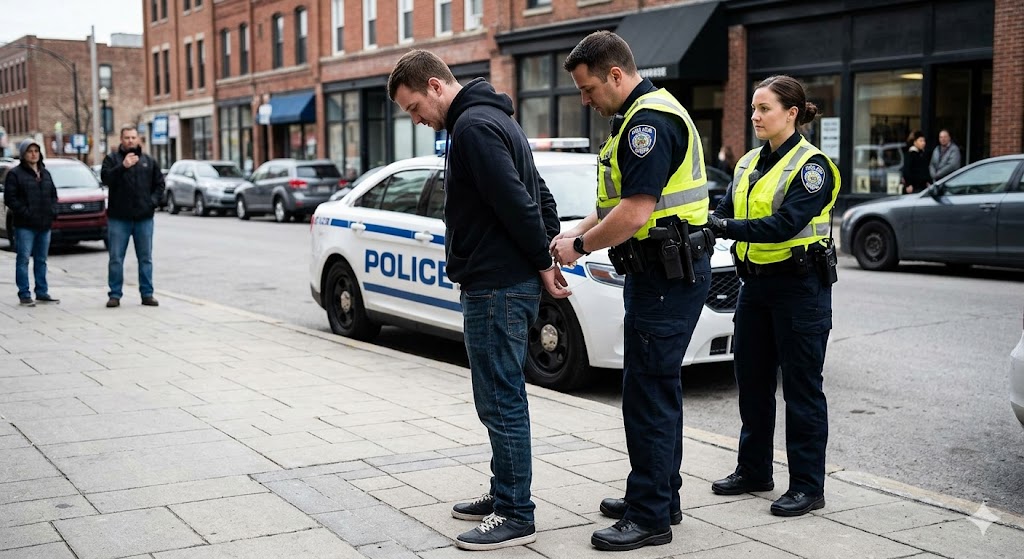
It is always the middle of the night. A phone rings in a quiet house outside Tyler or Longview, and on the other end is a son, a husband, a daughter — or a detective — telling you the word no family is ever ready to hear: murder. By sunrise there are patrol cars in the driveway, a name on a booking sheet, and a county jail cell holding someone you love. The local news already has the mugshot. The neighbors already have an opinion.
And somewhere across town, a homicide detective is typing up a statement that your loved one gave before anyone said the word lawyer — a statement that will be read aloud to twelve East Texas jurors a year from now.
This is the moment the rest of a life gets decided. Not at trial. Now. In the first 48 hours, when most families, paralyzed and terrified, make the exact mistakes the State is counting on.
Who You’re Actually Fighting
Understand the machine that has just turned toward your family. A murder charge in Texas is not prosecuted by an overworked clerk. It is prosecuted by the District Attorney’s Office on behalf of the State of Texas — and in a homicide case, the State brings everything it has.
Behind the prosecutor stands a full apparatus: homicide detectives who have already canvassed the scene, the Texas Rangers in the bigger cases, a county medical examiner whose autopsy report will frame the entire narrative of how the victim died, a crime lab analyzing DNA and ballistics, and jailhouse phone lines recording every call your loved one makes. The State has had days — sometimes weeks — to build its theory before the defense ever sees a page of discovery.
And if the prosecutor elevates the charge to capital murder under Section 19.03 of the Texas Penal Code, the stakes change entirely: the only two outcomes on the table become life in prison without the possibility of parole — or the death penalty. Texas carries out more executions than any other state. This is the most serious accusation the government can level at a human being, and the office leveling it is well-funded, experienced, and already several moves ahead.
You do not out-talk this. You do not explain your way out of it. You meet it with someone who has stood on the prosecution’s side of that courtroom and knows exactly how the case gets built.
Why You Want a Former Prosecutor Who Has Tried Murder Cases
Here is the promise of this article: by the time you finish, you will understand how Texas defines and grades a murder charge, the specific mistakes that sink families in the first 48 hours, and what a real defense actually attacks. That understanding comes from someone who has sat at both tables.
Heath Hyde spent a decade as a prosecutor at the Dallas County District Attorney’s Office, where he handled thousands of felony cases — including the prosecution of aggravated assault, kidnapping, and murder — and was a finalist for Henry Wade Prosecutor of the Year. He has since spent more than fifteen years on the defense side and has handled over 100 murder cases, building a reputation as one of Texas’s most relentless homicide trial lawyers. According to his firm’s reported results, he has reduced a client’s projected life sentence to a fraction of that exposure and turned a manslaughter case carrying up to twenty years into probation — outcomes featured in outlets including The Washington Post and the Texarkana Gazette.
When you have built murder cases for the State, you know precisely where they break. That is the knowledge Heath now uses for the accused.
The information below is general legal education, not legal advice for any specific case.
Key Takeaways
- The first 48 hours are the most important phase of a murder case — long before trial. What’s said and done now shapes everything.
- Say nothing. Your loved one has an absolute right to remain silent and to a lawyer. Police interrogations are designed to extract statements, not truth.
- Jail calls are recorded. Every phone call from the county jail can become evidence. Discuss nothing about the case on those lines.
- Texas grades homicide by degree and intent — capital murder, murder, manslaughter, and criminally negligent homicide carry vastly different consequences.
- A murder charge is not a conviction. The State must prove every element beyond a reasonable doubt, and real defenses exist: self-defense, mistaken identity, faulty forensics, and more.
- The lawyer you hire in the first days — ideally one who has tried homicide cases on both sides — can change the trajectory of the entire case.
Building the Defense: How a Texas Murder Case Is Won
The short answer first: If someone you love has been arrested for murder in East Texas, they must stop talking immediately and you must get an experienced homicide defense attorney involved today — before the next interrogation, before the next jail call. Here is the chain of reasoning behind that.
Link 1: Texas grades homicide — and the grade controls the stakes
Chapter 19 of the Texas Penal Code divides criminal homicide into four offenses. Capital murder (§ 19.03) — murder with an aggravating factor, such as killing a police officer, killing during another felony, or killing more than one person — is punishable by life without parole or death. Murder (§ 19.02) is a first-degree felony carrying five to ninety-nine years or life; but if the defense proves the killing happened in the sudden passion of an adequate provocation, it drops to a second-degree felony of two to twenty years. Manslaughter (reckless killing) and criminally negligent homicide carry far less. The single most important early question in any homicide case is which of these the facts actually support — and that is terrain a skilled defense fights over from day one.
Link 2: The interrogation room is built to convict, not to clear
Detectives are trained, patient, and permitted by law to lie to a suspect during questioning. “Just tell us your side and we’ll get you home” is a tactic, not a promise. Innocent and guilty people alike talk themselves into prison by trying to explain. The Fifth and Sixth Amendments exist for exactly this room. The only words your loved one needs: “I want a lawyer, and I am not answering questions.” Then silence — real, complete silence.
Link 3: The jail phone is the State’s easiest witness
Every call placed from a Texas county jail carries a recording warning, and prosecutors routinely comb those recordings for anything they can twist into an admission. Families unknowingly hand the State ammunition by discussing the night in question over the phone. Assume every call and visit is monitored. Case details belong in one place only: a private conversation with defense counsel.
Link 4: The State’s evidence is a story — and stories have holes
A homicide case is assembled from forensics and witnesses: autopsy findings, DNA, ballistics, cell-site location data, and eyewitness accounts. None of it is as airtight as it looks on the news. Medical examiners draw conclusions that can be challenged by independent experts. Eyewitness identification is notoriously unreliable. “Matches” from a crime lab carry error rates and chain-of-custody vulnerabilities. A defense attorney who has prosecuted these cases knows which threads to pull — where the timeline doesn’t hold, where the science was overstated, where a witness has a motive to shade the truth.
Link 5: Real defenses exist — and “reasonable doubt” is a high wall
The burden never shifts to the accused; the State must prove every element beyond a reasonable doubt. Beyond simply contesting that proof, Texas law recognizes affirmative defenses. Chapter 9 of the Penal Code protects the use of force — including deadly force — in self-defense and defense of others, the backbone of Texas’s “stand your ground” and Castle Doctrine protections. Mistaken identity, lack of intent, an unreliable confession, sudden passion that reduces the grade of the offense — each is a recognized path. The right defense depends entirely on the facts, which is why it must be investigated before the State’s version hardens into the only story the jury hears.
The East Texas Reality: Local Courts, Local Juries

A murder case here is tried in the state district court of the county where the killing is alleged to have occurred — Smith County in Tyler, Gregg County in Longview, Bowie County in Texarkana, Angelina County in Lufkin, Shelby County in Center, and the surrounding counties of the Piney Woods and beyond. These are not interchangeable venues. Each county has its own elected District Attorney with his own charging tendencies, its own bench, and — crucially — its own jury pool.
That last point matters more than most families realize. An East Texas jury is your neighbors: people who know the roads, the families, and the unwritten codes of a tight community. A lawyer who has tried cases across these courthouses understands how a Smith County jury hears a self-defense claim differently than a Dallas one, how a particular judge runs voir dire, and how the local DA tends to approach a plea before trial. (You can learn more about the Texas court system through the Texas Judicial Branch, and the state’s highest criminal court, the Texas Court of Criminal Appeals, is where a murder conviction is ultimately appealed.)
There is also the reputational weight unique to a small East Texas town, where a single accusation can define a family for a generation. Mounting a serious, dignified defense isn’t only about the verdict — it’s about protecting a name in a place where names are remembered.
Frequently Asked Questions
My family member was just arrested for murder. What is the single most important thing to do right now? Two things, immediately: make sure they say nothing to police beyond requesting a lawyer, and contact an experienced homicide defense attorney before the next interrogation. The first 48 hours shape the entire case.
The police say they just want our side of the story. Shouldn’t we cooperate? No — not without counsel present. Detectives are allowed to use deception during questioning, and “cooperation” almost always means giving the State evidence. Let the lawyer decide what, if anything, is shared and when.
What’s the difference between murder and capital murder in Texas? Capital murder is murder plus an aggravating factor defined in Penal Code § 19.03 — and it carries only life without parole or the death penalty. Ordinary murder under § 19.02 carries a five-to-ninety-nine-year or life range. Which one applies can turn on facts a defense attorney fights over from the start.
Can a murder charge be reduced or dismissed? Yes, it happens. Charges can be reduced to a lesser homicide offense, mitigated by sudden passion, weakened by faulty forensics or unreliable witnesses, or defeated outright by self-defense or reasonable doubt. Every case is different, and outcome depends on the specific facts and the strength of the defense.
Is it true the jail records our phone calls? Yes. Calls from Texas county jails are recorded and frequently used by prosecutors. Never discuss the facts of the case on a jail phone or during a monitored visit.
Is this article legal advice? No. This is general educational information about Texas homicide law. Every case is unique. If you or someone you love is facing a murder charge, speak directly with a qualified criminal defense attorney about your specific situation.
Related Resources From Heath Hyde
- Texas Murder Defense — Heath Hyde’s approach to defending the most serious charge in Texas.
- Murder Defense in Center, TX — local East Texas homicide defense, including featured case results.
- Federal Criminal Defense in the Eastern District of Texas — for homicide and violent-crime matters that cross into federal jurisdiction.
- Heath Hyde — Home & Free Consultation — start here if a family member has just been arrested.
Official Government Resources
For readers who want to verify any of the above against primary sources:
- Texas Penal Code, Chapter 19 — Criminal Homicide — the official statutory definitions of capital murder, murder, manslaughter, and criminally negligent homicide.
- Texas Penal Code, Chapter 9 — Justification (Self-Defense) — the statutes governing self-defense, defense of others, and the use of deadly force.
- Texas Judicial Branch — the structure of the state courts where felony cases are tried.
- Texas Court of Criminal Appeals — the state’s highest court for criminal matters, including murder appeals.
- State Bar of Texas — Find a Lawyer — verify any Texas attorney’s license and standing.
About the Author: Heath Hyde
Heath Hyde is a Texas criminal defense attorney and a fifth-generation East Texan who has spent his career on both sides of the courtroom. He began as a prosecutor at the Dallas County District Attorney’s Office, where he handled thousands of felony prosecutions — including aggravated assault, kidnapping, and murder — and was named a finalist for Henry Wade Prosecutor of the Year in 2004.
He earned his undergraduate degree from Texas A&M University and his law degree from Texas Wesleyan University School of Law, then clerked for former United States Attorney James A. Rolfe before entering private practice.
In more than two decades since, Heath has tried over 400 jury trials, handled over 9,000 criminal cases in state and federal court, and defended clients in more than 100 murder cases across Texas. His homicide work spans the full range — from manslaughter to capital murder — and his reported results include reducing a client’s projected life sentence to a fraction of that exposure and securing probation in a case that carried up to twenty years in prison.
Because he once built murder cases for the State, Heath knows precisely how the prosecution constructs its theory and where those cases come apart — knowledge he now uses exclusively to defend the accused.
Heath Hyde — Attorney at Law Licensed by the State Bar of Texas | Bar No. 00796807 Serving East Texas and statewide
This article is provided for general informational and educational purposes only and does not constitute legal advice, nor does it create an attorney-client relationship. If you or someone you love has been charged with murder or another serious offense, consult a qualified criminal defense attorney about your specific situation.