
What Should the Defense Do When Discovery Is Missing or Unreadable?
The body-camera file ends early. The lab report has no attachments. Here’s how the defense documents the gap and gets it fixed.
Mr. Heath Enix ‘Heath’ Hyde
Eligible to Practice in Texas
Attorney at Law
Bar Card Number: 00796807
TX License Date: 11/01/1996
Primary Practice Location: Dallas, Texas
Return to the Texas Murder Trial Defense Knowledge Hub
Short answer
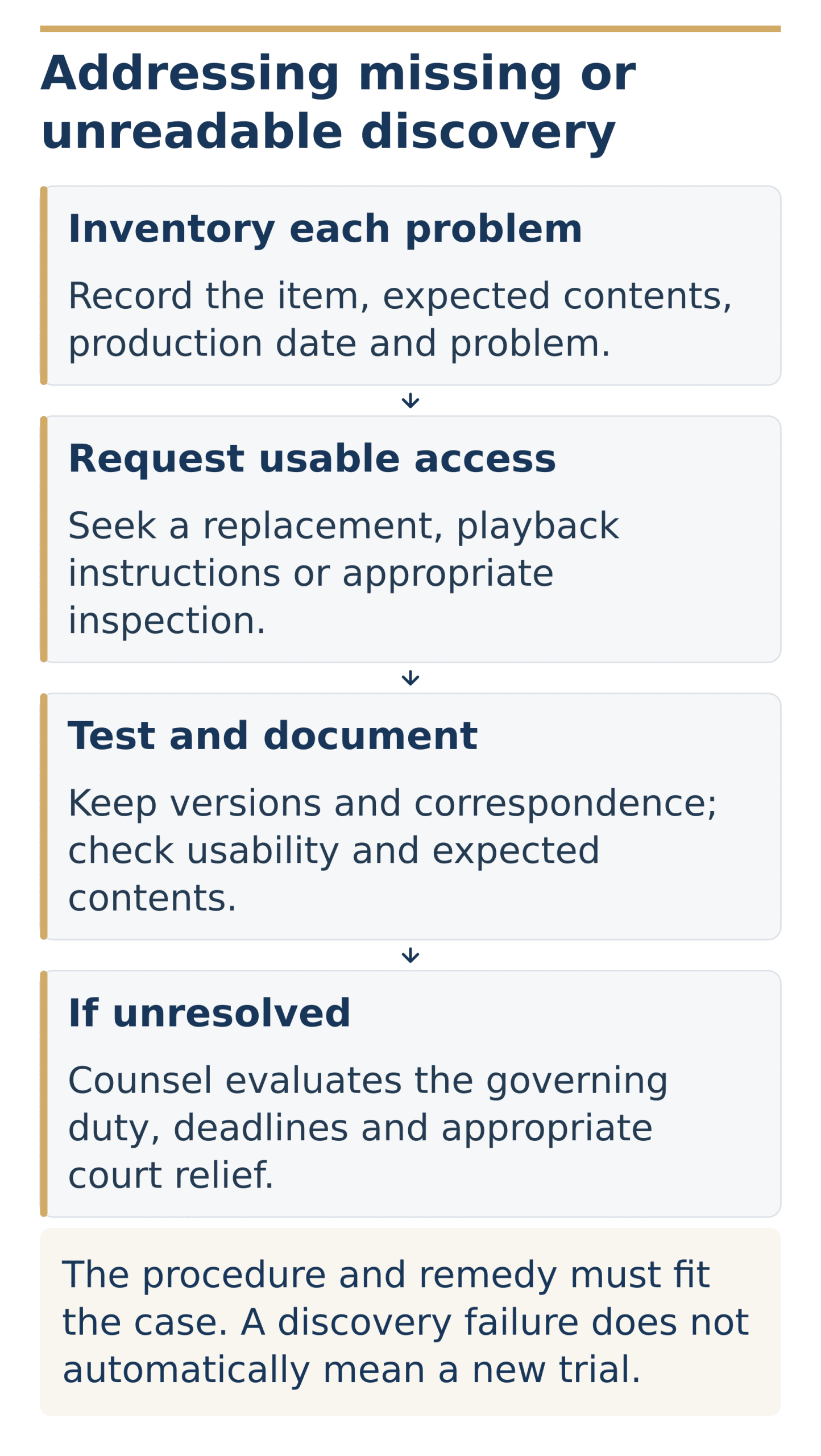
Write it down and ask early. A vague complaint on the first morning of trial fixes nothing. A dated log, a written request and, if needed, a motion well before trial can.
| Problem | First step |
|---|---|
| A file won’t open or play. | Ask for a working copy, the original, or the viewer. |
| A report mentions an item nobody produced. | Ask whether it exists and who holds it. |
| The State withheld or redacted part of an item. | Ask for a hearing under art. 39.14(c). |
| An item was lost or destroyed. | Find out when, why, and whether a substitute exists. |
What to do now: If anything came to you from police or the State, leave it exactly as it arrived and give it to your lawyer.
How does the defense write down a gap?
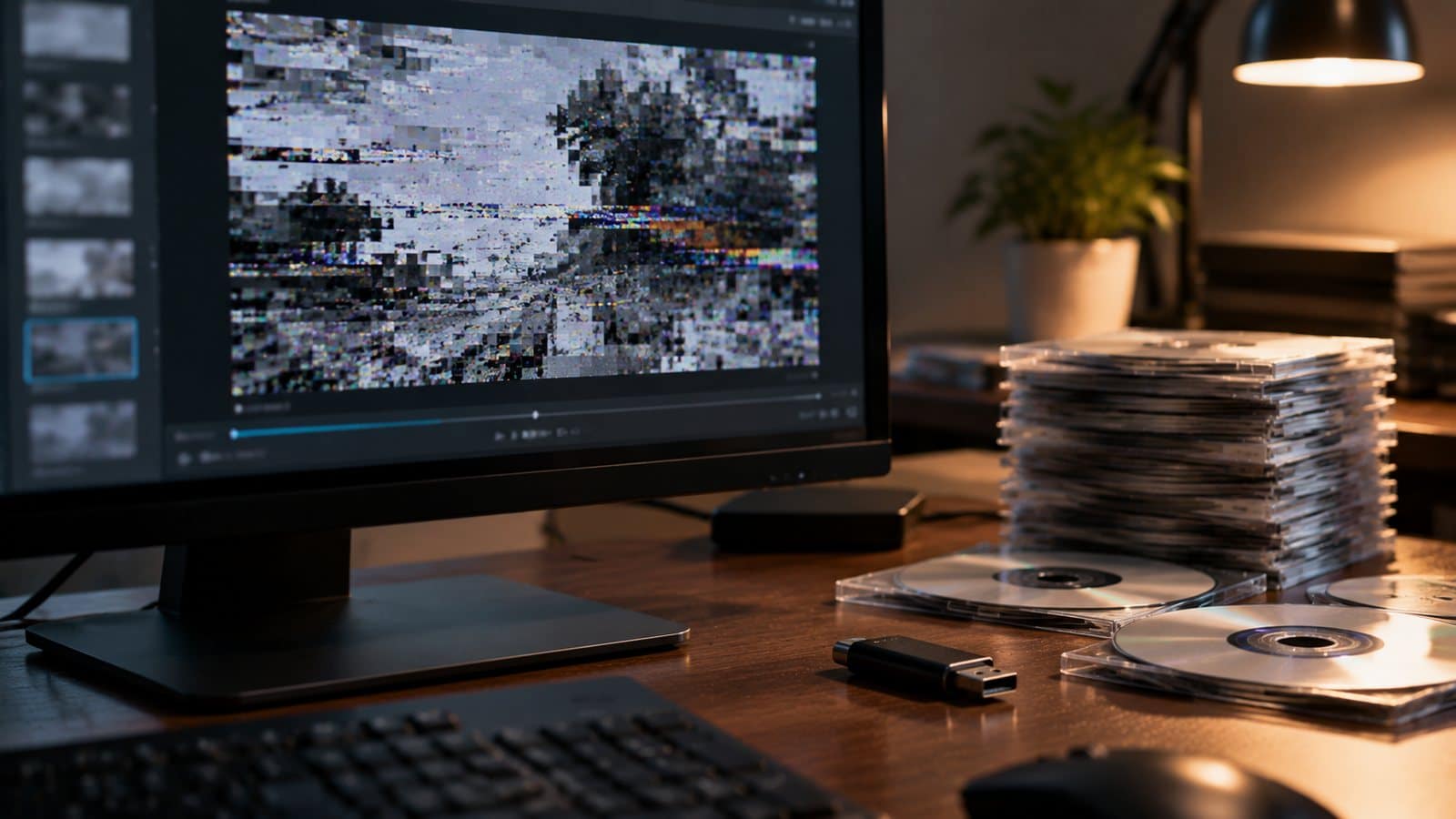
Take a file like this one. The second production arrives March 4: nine discs and a 412-page PDF. Disc 3 holds Officer 2’s body-camera video, and it stops at 2:11. Page 3 of the offense report says the camera ran through the arrest at 9:40.
The paralegal opens a spreadsheet. Row 23 reads: Officer 2 BWC, Exhibit 14, received March 4, ends 2:11, report p. 3 says camera on, asked March 6.
Some rows turn out to be nothing. Two files called BWC_0412.mp4 are the same file. A black box on page 3 is a redaction, which the State has to disclose under art. 39.14(c). The “expired” link just needed a fresh one.
How should the request be made?
The March 6 email to the prosecutor runs three lines. “Please produce the complete Officer 2 body-camera file; our copy ends at 2:11.” “Please confirm whether a recording of the second interview with Witness A exists.” “Trial is set for June 2, and our expert needs a working copy by May 1.” It goes in the folder next to row 23.
The statute backs that email up.
| Rule | What it gives the defense |
|---|---|
| Art. 39.14(a) | Production as soon as practicable, as copies or by inspection |
| Art. 39.14(i) | The State’s own record of what it sent |
| State v. Heath (2024) | Police-held items count as the State’s |
| Art. 39.14(j) | A signed-off list before trial or a plea, which puts row 23 on the record |
What can the judge do if the State doesn’t fix it?
No answer comes. A second email on March 27 gets nothing either. On April 17 the defense files a motion naming the item, both emails, and why the full video matters.
| Authority | What it allows |
|---|---|
| Art. 39.14(c) | A hearing, on request, on a withheld or redacted portion |
| State v. Heath (2024) | Exclusion of late evidence without a bad-faith finding |
| Watkins v. State (2021) | The exhibits should have been disclosed, so the case went back for harm analysis. |
| Art. 29.03 | A continuance on a written motion fully setting out sufficient cause |
A continuance motion has to be sworn by someone with personal knowledge of the facts (art. 29.08). The case doesn’t end over a discovery problem; the judge picks a remedy that fits, such as a deadline order, a hearing on a redaction, more time for the expert, or exclusion of evidence the State sat on for months.
What if the evidence no longer exists?
A store’s camera system overwrote its video after 30 days. Nobody can produce what’s gone, so the question shifts from discovery to preservation. That’s a separate legal question from late or missing discovery, with its own two Supreme Court cases.
| Case | What the Court held |
|---|---|
| California v. Trombetta (1984) | The State must preserve evidence whose exculpatory value was apparent before destruction, absent a comparable substitute. |
| Arizona v. Youngblood (1988) | Losing potentially useful evidence violates due process only if police acted in bad faith. |
Start with the clock. Who asked for the store video, and on what day? Did a detective watch it before it looped? Youngblood came out of clothing samples nobody refrigerated. A purged 911 call can still leave a CAD report.
What can a family do when a file is missing?
A sister remembers that the gas station across from the apartment had a camera over the pumps. She may be the only person who knows it was there.
Gather these for the defense lawyer:
- Receipts, texts, photos, and names that may fill a gap
- Business cameras or phones that may have recorded something
- Your own original files, unchanged
- Dates you saw or heard about each one
Hand them to the lawyer instead of calling the business or the witnesses yourself.
Frequently asked questions
Who pays for copies of discovery?
Sometimes the defendant. Under art. 39.14(l), a court may order the defendant to pay costs, capped at Public Information Act charges.
Can the defense agree to more discovery than the statute requires?
Art. 39.14(n) lets the parties agree to equal or greater discovery and documentation.
Is a missing item always a Brady problem?
Brady needs three things: favorable evidence, suppression, and prejudice. A missing neutral file may be an art. 39.14 issue instead.
Can our family get copies of the State’s file?
Art. 39.14(e) limits who can receive discovery, so don’t ask for police reports or post anything you’ve seen. The family resources page has other ways to help.
Talk with Heath Hyde
Raise missing files early, while there’s still time to fix them. Call Heath Hyde, P.C. at 903.439.0000 or request a free consultation.
Legal sources
- Tex. Code Crim. Proc. art. 39.14
- State v. Heath, 696 S.W.3d 677 (Tex. Crim. App. 2024)
- Watkins v. State, 619 S.W.3d 265 (Tex. Crim. App. 2021)
- Arizona v. Youngblood, 488 U.S. 51 (1988)
This article provides general educational information, not legal advice. Every case depends on its facts, evidence, court, deadlines and governing law. Past results do not guarantee a similar outcome.