

Texas Murder Trial Defense
Can Deadly Force Be Used to Defend Another Person in Texas?
Texas Penal Code §9.33 permits force to protect another when the actor reasonably believes unlawful force threatens that person, would be justified under §9.31 or §9.32 in using force or deadly force against that threat to protect themself, and reasonably believes intervention is immediately necessary.
Eligible to Practice in Texas
Attorney at Law
Bar Card Number: 00796807
TX License Date: 11/01/1996
214 Connally St Ste A
Sulphur Spgs, TX 75482-2612
Return to the Texas Murder Trial Defense Knowledge Hub
Short Answer
Yes, it can be. Texas Penal Code §9.33 permits force or deadly force to protect another person only when its conditions are met. Under the circumstances as you reasonably believed them to be, would §9.31 or §9.32 have justified using that force to protect yourself from the unlawful force or unlawful deadly force you reasonably believed threatened the other person? You must also reasonably believe intervention is immediately necessary. The test does not separately require that the person you protected would have been justified in using force. In a Texas murder case, the death alone does not answer those questions.
A defense-of-another investigation should preserve threats, injuries, scene evidence, communications, witness accounts and the sequence of events before those materials disappear or change.
Why This Question Matters
A family may call after an arrest and ask whether helping someone else is a defense. Before answering for that case, I need to read the charge and find out what has happened in court. The same murder charge can arise from very different encounters. What happened before the intervention may be as important as the moment force was used.
I need the sequence before the intervention: who approached whom, what escalated and what the accused witnessed. Preserve recordings and witness information. Discuss the case privately with counsel, away from recorded calls and social media.
For example, suppose your brother is on the ground and someone is standing over him with a bat. What you could see and hear bears on your reasonable perception of the threat, the degree of force justified and the need to intervene immediately. The rules come from self-defense; counsel must apply them from the actor’s perspective under §9.33.
How I Would Analyze the Issue
When a report describes a recording, I want the recording. If there is a screenshot, I want to know whether the original file still exists. An expert’s opinion calls for a look at the underlying data and method. I work from each legal requirement to the evidence offered to support it, making a separate list of records that are missing or were never preserved.
My review follows both parts of §9.33. I apply the relevant self-protection rule—§9.31 or §9.32—to the circumstances as the accused reasonably believed them to be. I also examine the accused’s reasonable belief that immediate intervention was necessary. The extra §9.32 requirements remain part of any deadly-force analysis. I use body-camera and interview recordings to check the factual account.
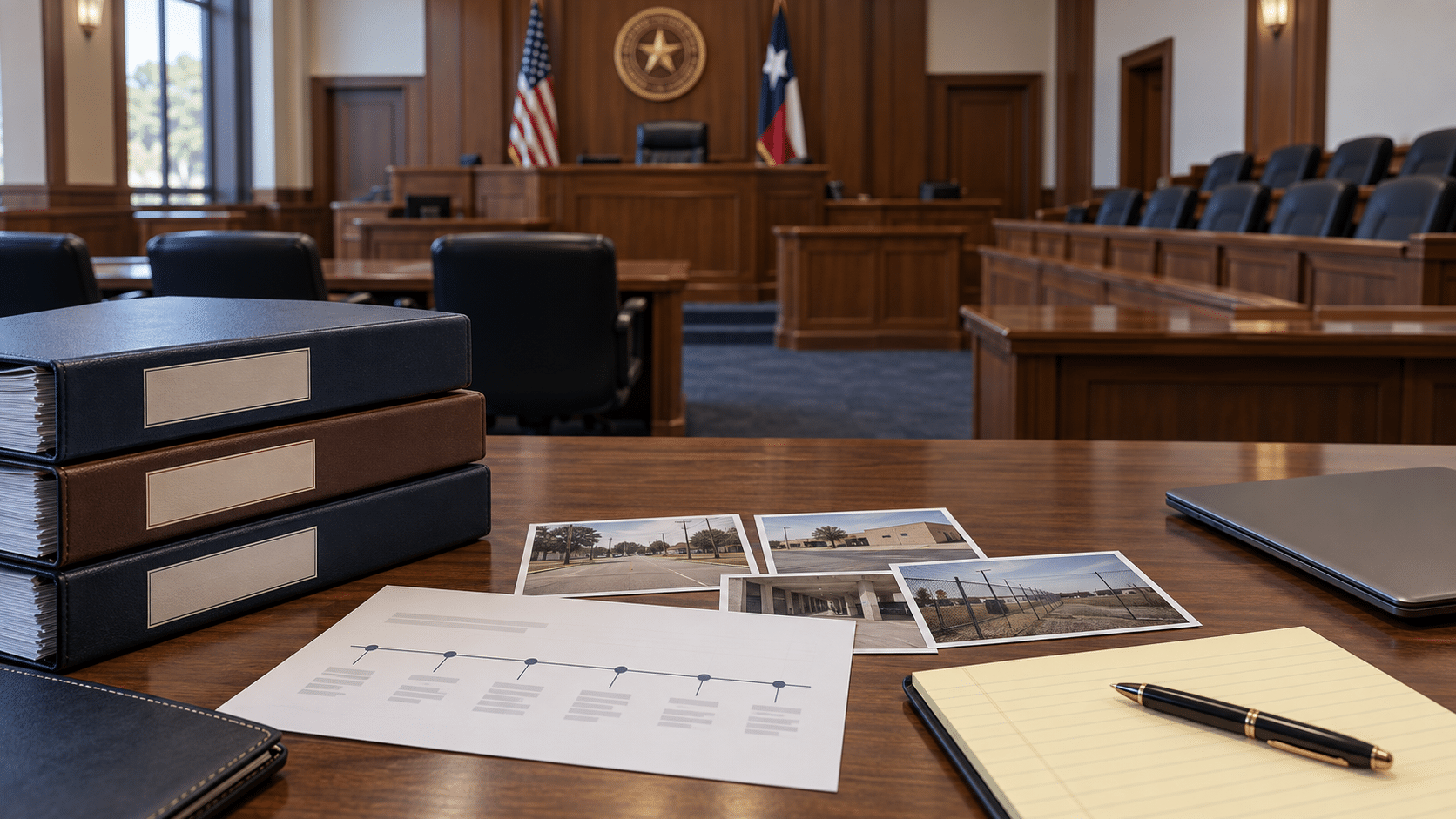
I build the timeline from calls, messages, medical events and evidence transfers. Conflicting times need investigation, sometimes expert review. They don’t decide guilt.
Preparing for trial also helps with negotiations. I need to know the weaknesses in the proof before advising a client about a proposed resolution. That preparation does not commit the client to a trial.
What the Prosecution May Try to Establish
When seeking to prove a murder charge, the State may dispute the accused’s opportunity to observe, the immediate need to intervene, or the degree of force allowed under §9.31 or §9.32 in the reasonably perceived circumstances. Check the whole 911 call. What sounds like delay in a short excerpt may have an explanation in the surrounding conversation that supports the defense.
A prosecutor may put a message beside a witness statement and argue that each supports the other. Medical findings, recordings and expert opinions can be used the same way. The defense has to examine the combined account as well as each item; circumstantial proof can gain strength from that combination.
I check the witness’s position, the original recording and the way the evidence was collected. For expert testimony, I look at the work supporting the opinion. If the account does not explain a significant fact, I keep investigating it.
What the Defense Must Test
For the jury to consider the defense, admitted evidence must support it. That is the submission requirement in §2.03. If the issue goes to the jury, the court must instruct it to acquit if it has a reasonable doubt on the defense. Section 2.01 separately requires the State to prove every element of the offense beyond a reasonable doubt. I review the record for the evidence needed to raise the defensive issue.
An admissible recording may still prove less than the prosecutor claims. I check its source, reliability and context, including whether a timestamp refers to the event in dispute. That is part of assessing its weight.
I check what investigators ruled out as well as what they found. Did they record a negative test result? Keep material that did not fit their theory? Disclose evidence favorable to the accused? An alternative explanation needs support in the record. Naming another suspect without evidence does not help.
The details matter: where each person stood, the lighting, how much time passed, what the protected person was doing and what the actor could actually see and hear. A sincere belief does not suffice if it was not reasonable under the circumstances or the other statutory conditions were not met. The defense-submission and reasonable-doubt rules above still apply.
Evidence and Documents to Review
- Scene photographs and measurements
- Injuries
- 911 and dispatch recordings
- Video
- Weapons evidence
- Prior threats known to the accused
- Messages
- Witness accounts
- Medical records
Questions That Can Change the Analysis
- What assumptions did an investigator or expert use, and are those assumptions supported?
- Which verified facts support another explanation, and where would it require speculation?
- When is the next court setting or deadline? Is evidence at risk of deletion before then?
- What does the indictment, complaint or warrant actually allege?
- Which facts come from an original recording or file, and which come only from a summary?
- What evidence is missing, incomplete, unreadable or preserved in the wrong format?
Common Misunderstandings
- An arrest or indictment is an accusation, not proof that every alleged fact is true.
- A confident witness can still be mistaken about identification, timing, distance or sequence.
- A laboratory report does not eliminate the need to examine source data, handling and limitations.
- A person’s silence, fear or unusual behavior does not automatically establish guilt.
Helping someone else does not dispense with the self-defense requirements. Under §9.33, apply §9.31 or §9.32 to the circumstances as the accused reasonably believed them to be. The accused must also reasonably believe that intervention is immediately necessary. A death does not, on its own, tell us what the accused perceived or establish whether the statute’s conditions were met.
East Texas Murder Case Considerations
Use the official records to confirm the county, court, cause number, indictment, prosecutor and custody location. The city in a news story or jail listing may not tell you which authority brought the charge. More than one agency, and sometimes more than one jurisdiction, may be involved.
Knowing the local courts and agencies helps with obtaining records, planning travel and following court procedures. Counsel still has to investigate this encounter and apply Texas law to it. Where expert work is needed, familiarity with the courthouse cannot replace it.
The location and agencies involved do not by themselves establish whether the intervention met §9.33. Counsel still needs to determine what the actor could see and hear when force was used.
What Families Should Do Now
Keep the booking papers, court notices, warrants, account notices and relevant communications. Make a list of the agencies and investigators named in them. Share evidence and witness information privately with counsel. Leave devices and accounts unchanged. Don’t contact an alleged victim, coach a witness, coordinate accounts or discuss the facts on recorded jail calls.
Save the full message thread, full-size photographs, 911 audio and dispatch records. Keep anything showing where people stood. Leave the files as they are and give witness names to counsel. Calling witnesses to compare accounts can cause problems.
Talk With Heath Hyde About a Serious Homicide Matter
At the consultation, your defense lawyer will need the source records and your account of what you saw and heard. Point out what you missed. Counsel can then assess your reasonable beliefs about the circumstances and the immediate need to intervene.
If police have asked for an interview, served a warrant or made an arrest, contact qualified counsel promptly. Don’t let an approaching court date pass while trying to assemble a perfect file. Call Heath Hyde, P.C. at 903.439.0000 or request a confidential consultation. Have the person’s full name, charge, court and next deadline ready, plus the facility and booking number if applicable. Ask the firm how to deliver confidential evidence before putting it in a general contact form.
Frequently Asked Questions
Does the same answer apply in every Texas murder case?
No. The indictment, procedural stage, facts, evidence, court and governing law can materially change the analysis.
Can one piece of evidence decide the case?
Sometimes a single item is very important, but it must still be authenticated, placed in context and compared with the rest of the record.
When should the defense begin investigating?
As early as reasonably possible. Evidence can disappear through ordinary retention, memories can change and deadlines can limit available options.
Should family members investigate witnesses themselves?
They should give names and information privately to counsel. Direct contact can create witness, safety, privilege and evidence problems.
Does preparing for trial mean the case cannot be resolved?
No. Trial preparation allows the lawyer and client to evaluate the evidence, risks and lawful resolution options from an informed position.
Legal Sources
Texas Penal Code §§9.31–9.33: https://tcss.legis.texas.gov/resources/PE/htm/PE.9.htm
Texas Penal Code §§2.01 and 2.03 (burden of proof and defensive issues): https://tcss.legis.texas.gov/resources/PE/htm/PE.2.htm
Texas Penal Code Chapter 19, Criminal Homicide: https://tcss.legis.texas.gov/resources/PE/htm/PE.19.htm
This article provides general educational information, not legal advice. Every case depends on its facts, evidence, court, deadlines and governing law. Past results do not guarantee a similar outcome.