


Texas Murder Trial Defense
How Does Self Defense Apply to a Texas Murder Charge?
Texas self-defense may justify force reasonably believed immediately necessary against unlawful force. Deadly force has additional statutory limits, including an immediate threat requirement or a listed violent crime.
Eligible to Practice in Texas
Attorney at Law
Bar Card Number: 00796807
TX License Date: 11/01/1996
214 Connally St Ste A
Sulphur Spgs, TX 75482-2612
Explore the Texas Murder Trial Defense Knowledge Hub
Short Answer
Here’s the starting point. Under Texas Penal Code §9.31, you can use force to protect yourself from someone’s unlawful force, used or attempted, if you reasonably believed that force was immediately necessary.
Deadly force is a higher bar. First you need §9.31 justification. Then §9.32 adds a second requirement: a reasonable belief that deadly force was immediately necessary. It has to be to protect against unlawful deadly force, or to stop an imminent aggravated kidnapping, murder, sexual assault, aggravated sexual assault, robbery or aggravated robbery.
Whether the evidence raises those issues comes down to the encounter, and to what the accused reasonably perceived.
Why This Question Matters
Being afraid isn’t enough on its own. Self-defense turns on the statute’s conditions and on evidence about this particular encounter.
Ordinary force has one threshold and deadly force has another. Timing matters to the factfinder. So do distance, movements, threats and injuries. All of it goes into deciding what the accused reasonably believed and whether the response was immediately necessary.
Retreat is handled separately. Look at §9.32(c)–(d). If you had a right to be there, didn’t provoke the other person, and weren’t engaged in criminal activity, you had no duty to retreat before using deadly force that was otherwise justified. The factfinder can’t count your failure to retreat against you on necessity. Section 9.31(e)–(f) does the same for force. The rest of the justification rules still apply.
How I Would Analyze the Issue
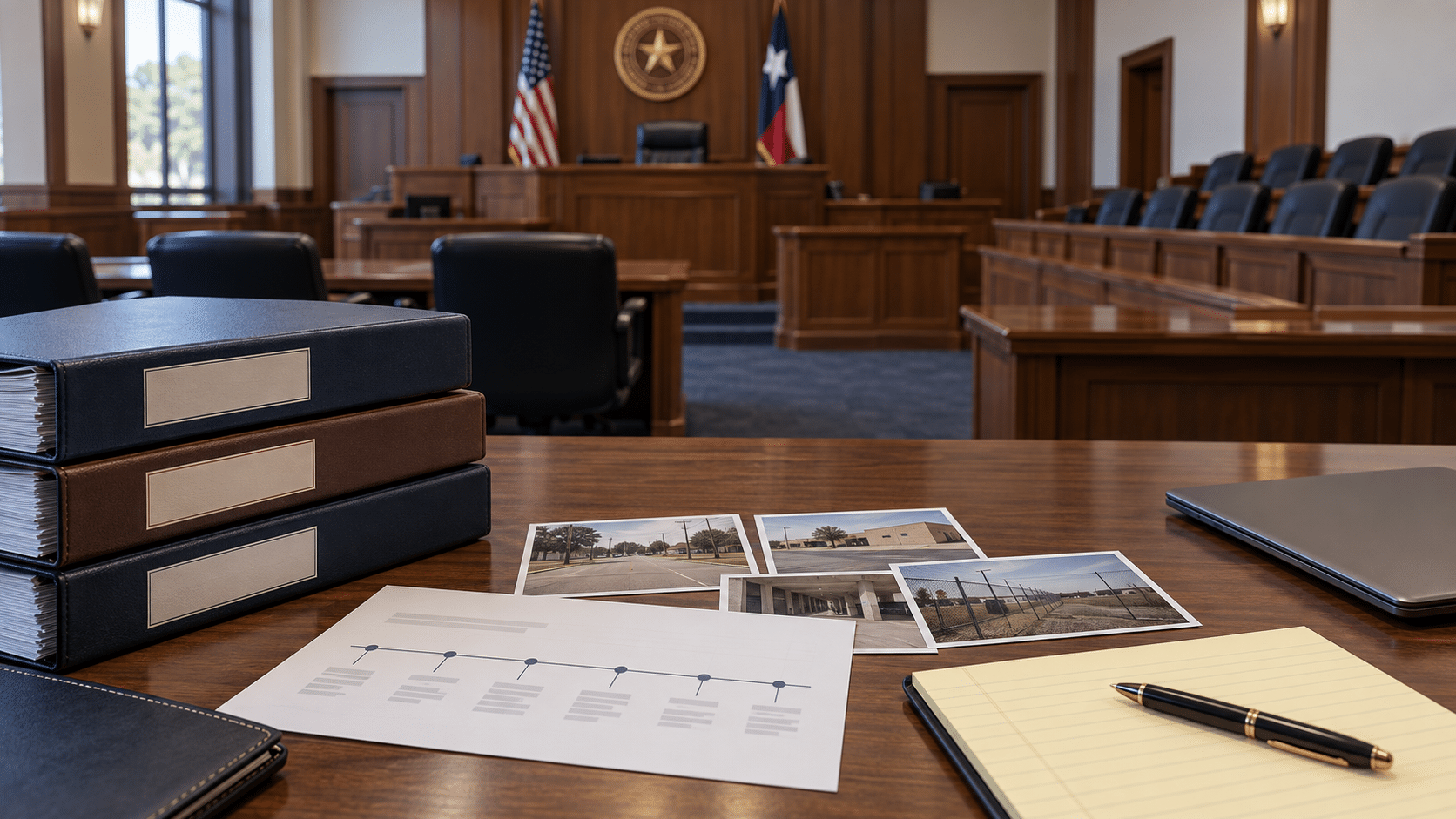
The first job is a timeline built from original records. That’s the 911 call and dispatch log, video, photos and messages. It’s also witness accounts, medical records and scene measurements.
I keep the §9.31 facts apart from the §9.32 facts. Then I take the encounter one moment at a time. What could the accused see and hear right then? Was the force unlawful? Is there proof of immediacy and necessity?
What the Prosecution May Try to Establish
The State may say there was no unlawful force at all. Or that the accused didn’t reasonably see an immediate threat. Or that the accused used more force than was immediately necessary.
To make that case, prosecutors may point to timing and distance, the injuries, statements, video and other physical evidence. They may also use what the accused did before and after. Every one of those arguments has to hold up against the full record and the statute.
What the Defense Must Test
Look for proof of unlawful force in the record. Look for proof of a reasonable belief, too, and of immediacy and necessity.
Lock down the original recordings and files. Check whether the scene was documented accurately. And keep what a witness actually saw apart from what that witness later concluded. Raising self-defense doesn’t mean it wins. The State still has to prove every element of murder.
Evidence and Documents to Review
Scene photographs and measurements come first, along with the injuries. Then 911 and dispatch recordings, any video, and the weapons evidence.
Don’t skip prior threats the accused knew about. Pull the messages, the witness accounts and the medical records too.
Questions That Can Change the Analysis
- What threat, or what unlawful force, did the accused perceive? When?
- At each point, what could the accused actually see or hear?
- Was this ordinary force or deadly force? That decides which statutory requirements apply.
- Does everything line up on one timeline: recordings, injuries, scene measurements, witnesses?
Common Misunderstandings
A statement that someone acted in self-defense does not by itself establish statutory justification.
Force and deadly force aren’t judged by the same rules.
Even with self-defense in play, the State has to prove the offense beyond a reasonable doubt.
Local Case Considerations
A reported location doesn’t tell you what the accused could see or hear. Get the court and the investigating agencies from official records. Then go through the original recordings and scene evidence, all of it, in context.
What Families Should Preserve
Hold on to the originals. Video, 911 audio, messages, photographs, medical records, and how to reach each witness.
Write down where each item came from and when it was made. Don’t edit any file. Don’t try to line up everyone’s story. And don’t talk about what happened on a recorded call.
Discuss the Case With Counsel
A self-defense review needs a timeline. Counsel will also need the evidence of what happened before, during and after the force was used. Keep the original files intact and share them privately with your lawyer. You can read more in the Texas murder defense knowledge hub, including how murder, manslaughter and criminally negligent homicide compare. Call Heath Hyde, P.C. at 903.439.0000 or request a confidential consultation with a Texas criminal defense lawyer.
Frequently Asked Questions
Does saying self-defense end the case?
No. The evidence has to support what the statute requires. Then the issue is judged under the law and the jury instructions.
Is ordinary force governed by the same rule as deadly force?
No. Sections 9.31 and 9.32 are related, but they aren’t the same. Deadly force comes with extra statutory conditions.
Does the accused have to prove innocence?
The State retains the burden to prove the offense beyond a reasonable doubt. Under Penal Code §2.03(c)–(d), evidence must support a defense before it is submitted to the jury. If it is submitted, the jury must be instructed that a reasonable doubt on the defense requires acquittal.
Legal Sources
Texas Penal Code §§2.01, 2.03, 9.31, 9.32: https://tcss.legis.texas.gov/resources/PE/htm/PE.9.htm
Texas Penal Code, Chapter 2 (burden of proof and defensive issues): https://tcss.legis.texas.gov/resources/PE/htm/PE.2.htm