


Money Laundering · Texas and Federal Charges
Can Cryptocurrency Transfers Be Money Laundering?
Separate blockchain transfers from proof of identity, knowledge, purpose, and value when reviewing cryptocurrency allegations.
Eligible to Practice in Texas
Attorney at Law
Bar Card Number: 00796807
TX License Date: 11/01/1996
214 Connally St Ste A
Sulphur Spgs, TX 75482-2612
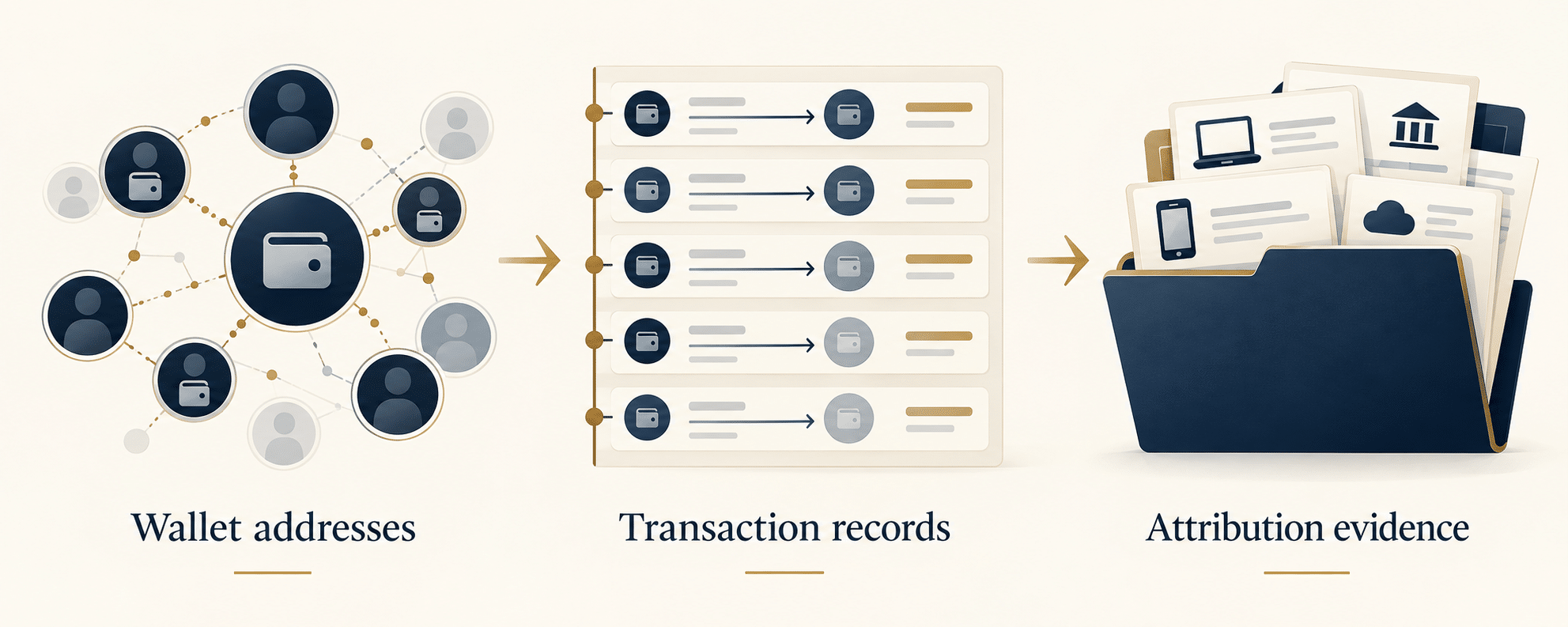
A line on a blockchain chart can show money moving. It cannot, on its own, tell you who was behind the address or what that person knew. If I were reviewing a cryptocurrency money-laundering allegation, I’d begin with the charge and the transfer it identifies, rather than the chart’s conclusion.
Build a record for each transfer
| Record | What to check |
|---|---|
| Transaction: | Record the addresses, transaction hash, amount, and time shown on the chain. Keep custodial conversions and internal movements as separate steps. |
| Attribution: | Check whose identity the exchange verified. Compare that file with authenticated logins, device records, and wallet-recovery evidence before attributing the transfer to a person. |
| Valuation: | Keep a dated price record for the asset and amount at issue. Identify the quote’s source and time. Any use of a later price needs a legal explanation. |
Test the analyst’s explanation
- The underlying inputs and the method used to group addresses
- The assumptions behind any cluster or risk label
- Whether a shared exchange or other service explains the pattern
- Whether another analyst can reproduce the result from the same inputs
- The original export, who collected it, and how it was converted for review
- Which statements in the timeline are recorded facts and which are inferences
Read the Texas and federal allegations separately
- Texas defines funds to include digital currency in Section 34.01(2)(D). Counsel should use the version in effect on the alleged offense date.
- Promotion under Section 1956(a)(1)(A)(i): identify the alleged unlawful activity and ask what shows an intent to promote it.
- Section 1956(a)(1)(B)(i): what supports knowledge that the transaction was designed, at least partly, to conceal the proceeds’ nature, location, source, ownership, or control?
- For either of those branches, what supports knowledge that the property represented proceeds of some form of unlawful activity, and the remaining elements?
- Section 1957: does the allegation meet its monetary-transaction definition, more-than-$10,000 threshold, criminal-source and knowledge requirements, and other elements?
Use of a privacy tool may figure in a concealment theory. Assess what it shows about the particular transaction under the charged subsection. The label alone does not establish the required knowledge or intent.
Sources
This article provides general information, not legal advice. The law and its application depend on the facts and the law in effect on the relevant date. Consult a lawyer about a specific matter.
Money Laundering Defense · Texas and Federal Financial Crimes Defense