


How Can Accident or Lack of Intent Affect a Murder Allegation?
An unintended death can still lead to a murder charge. The question is what the prosecution must prove about the act, the person’s state of mind, and the cause of death.
Mr. Heath Enix ‘Heath’ Hyde
Eligible to Practice in Texas
Attorney at Law
Bar Card Number: 00796807
TX License Date: 11/01/1996
Primary Practice Location: Sulphur Springs, TX and Dallas, TX
Request a confidential consultation · Call 903.439.0000

Return to the Texas Murder Trial Defense Knowledge Hub
Short Answer
An accident claim, alone, doesn’t end a murder allegation. Texas has no separate accident defense that makes the case go away.
The State still carries the burden. It must prove each element of the charged offense, including the required mental state and voluntary conduct under §6.01. The indictment, the jury instructions and the evidence decide whether it can.
Why This Question Matters
The charging document, procedural stage and verified evidence matter more than the label a family hears after a death. Two cases described as murder can involve different facts, legal theories, experts and trial decisions. Counsel needs to identify the disputed element, when the relevant events occurred, and whether reliable evidence supports the inference the State asks the jury to draw.
That review should begin early. Recordings may be overwritten, electronic data can disappear through ordinary retention cycles, memories may change and deadlines may narrow the available options. Discussions on recorded calls or social media can create additional evidence.
Which Theory Is Charged?
Texas Penal Code §19.02(b)(1) covers intentionally or knowingly causing a death. Subsection (b)(2) is different: intending serious bodily injury and committing an act clearly dangerous to human life that causes a death. Under §6.03, intentionally causing a death means death was the person’s conscious objective or desire; knowingly causing it means the person was aware the conduct was reasonably certain to cause death.
Then there’s (b)(3), felony murder. The State must prove that the person committed or attempted a qualifying felony other than manslaughter. In the course of and in furtherance of that felony or attempt, or in immediate flight from it, the person must have committed or attempted an act clearly dangerous to human life that caused the death.
Felony murder doesn’t need an intent to kill. It does need the qualifying felony or attempt and every other element. So “I never meant to kill anyone” won’t answer every theory the State might charge.
Subsection (b)(4) covers knowingly manufacturing or delivering a Penalty Group 1-B controlled substance in violation of Health and Safety Code §481.1123 when someone dies from introducing any amount of that substance into the body, whether alone or mixed with another substance. It does not require an intent to kill. Section 19.02(e) provides a defense when the manufacturing or delivery was authorized by Chapter 481 or other state or federal law.
Read the Indictment and Charge
Ask counsel for the indictment and read the actual allegation. Look at the conduct it describes. Then look at the mental state it claims. Counsel also needs the date of the alleged conduct to check which law applies.
Families often say the death was unintentional. Meanwhile the indictment alleges intent to cause serious bodily injury. Those aren’t the same question.
At trial the jurors get the court’s charge, which lays out the rules for each submitted offense. If the law and the evidence support it, that charge can include a lesser offense too.
What the Evidence Can Show
Jurors can infer a mental state from statements, conduct, physical evidence and the surrounding circumstances. That’s why how intent is proven or disputed (forthcoming article) needs its own look.
Watch every recording start to finish. Read the scene evidence and the medical findings. If there’s an expert, ask how the opinion was reached and what the expert assumed.
“Accident” can mean the result wasn’t intended. It can also mean the act itself wasn’t voluntary. Those are different claims, and the culpability the charged subsection requires is a separate issue again. The State carries the burden on each element beyond a reasonable doubt. An unintended result does not by itself make bodily movements involuntary. Counsel must examine the relevant course of conduct, not just the final movement, when evaluating §6.01.
Checking Sources and Building a Timeline
Trace each important factual assertion to its source. A report may omit details from the recording it summarizes. A screenshot may leave out information available in the native file. An expert’s conclusion needs to be checked against the underlying data, method and assumptions. Identify what exists, what is incomplete, and what should exist but has not been produced or preserved.
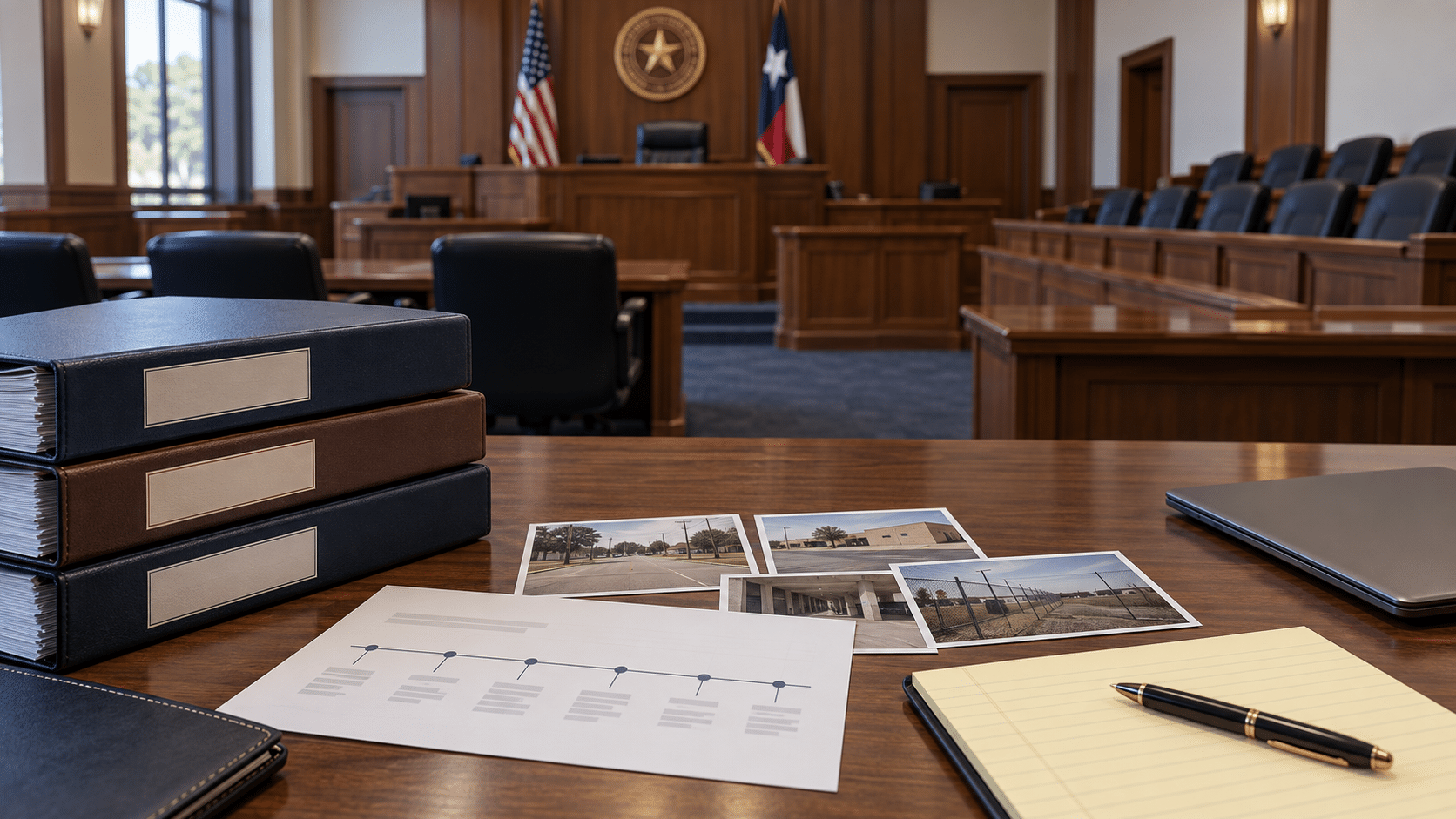
Put times, locations, calls, messages, witness accounts, medical events and evidence-handling records on one testable timeline. Conflicts do not automatically establish guilt or innocence. They show where further investigation, legal research or qualified expert review may be needed.
Trial preparation should continue while counsel and the client consider lawful resolution options. Informed advice about risks, negotiation and client decisions depends on preparation.
Testing the Prosecution’s Account
The State may argue that testimony, statements, physical evidence, digital records, medical findings and expert opinions reinforce one another. The defense should ask whether the evidence was lawfully collected and the originals preserved, whether a witness had a reliable opportunity to observe, and whether an expert stayed within the limits of the discipline. The prosecution’s account should be tested against all significant facts, including those that do not support the charge.
What the Defense Must Test
Admissibility, reliability and weight are separate questions. Evidence may be admissible but weak, accurate but misleading without context, or initially persuasive until compared with better source material.
Look for omitted facts and reasonable alternative interpretations without inventing a suspect or unsupported explanation. Ask whether investigators tested reasonable possibilities, preserved contradictory material, documented negative results and disclosed information favorable to the accused.
Testing Another Explanation
Here’s a hypothetical, not a real case result. A witness talks about a struggle. The police summary just says the defendant fired a weapon. Counsel will want that witness’s whole account, and any recording of it.
Sequence matters here: who moved first, what each person could see, and which act allegedly caused the death (forthcoming article).
A photo can back up a story or sink it. Medical findings and properly supported expert work can do the same. Keep the original footage, the before and after too, not a clip someone picked to help one side.
Evidence and Documents to Review
- Scene evidence
- Medical findings
- Communications
- Video
- Device and location records
- Witness accounts
- Timelines
- Expert data
- Evidence of other plausible actors or causes
Questions to Ask About the Charged Theory
Which §19.02 subsection is charged? What mental state goes with it?
Is there evidence of voluntary conduct under §6.01, and of the result alleged?
Do the original records back up the statements and expert opinions?
Does the jury charge match the theory the State charged?
Questions That Can Change the Analysis
- Which facts come from an original recording or file, and which come only from a summary?
- What evidence is missing, incomplete, unreadable or preserved in the wrong format?
- Did a witness’s account change after speaking with other people or reviewing media?
- What assumptions did an investigator or expert use, and are those assumptions supported?
- Does another explanation fit the verified facts without speculation?
- What deadline, court setting or preservation issue requires action now?
Common Misunderstandings
A death alone doesn’t prove every element of murder.
No intent to kill? That still doesn’t answer felony murder, or several other theories.
Calling it an accident doesn’t replace going element by element.
- A defense lawyer does not need to prove a complete alternate case before testing whether the State met its burden.
- Trial preparation and negotiation are not opposites. Careful preparation is what makes advice and negotiation informed.
- An arrest or indictment is an accusation, not proof that every alleged fact is true.
- A confident witness can still be mistaken about identification, timing, distance or sequence.
East Texas Case Records
Confirm the county, court, cause number, indictment, prosecutor, custody location and all investigating agencies from official records. A booking label won’t necessarily tell you which theory the State charged. Neither will a news story. A city named in a report may not identify the charging authority or court. A case described as occurring in an East Texas city may ultimately proceed in a district court serving that county. Some matters involve more than one jurisdiction.
Local knowledge can help with procedures, travel, records and agencies. It does not replace statewide criminal-law knowledge, independent investigation, qualified experts and serious trial preparation. The defense plan must fit the evidence and law of the particular case.
What Families Can Preserve
Preserve official paperwork, booking information, court notices, warrants, account notices and relevant communications. Write down the names of agencies and investigators. List what you have and where each item came from. Screenshots drop earlier messages. Forwarded videos lose their source. Keep the original recordings and native files, and flag gaps, unreadable material or format problems for counsel.
Give potential evidence and witness information privately to counsel. Don’t contact an alleged victim, coach witnesses or line up their stories. Don’t edit evidence or alter a device or account. Don’t talk through what happened on a recorded jail call or social media. If a business or someone else owns footage, name them for counsel quickly so preservation can be looked at.
Discussing the Allegation With Counsel
If investigators want an interview, a warrant has been executed, an arrest has occurred or a court date is approaching, gather the official documents and contact qualified counsel promptly. Going into a consultation, bring the charging document, the court name and the next hearing date if you have them. Include the person’s full name, facility and booking number if applicable, listed charge and next deadline. Let your defense lawyer know if you have the original recordings, or only someone’s description. You can reach Heath Hyde, P.C. at 903.439.0000 or request a confidential consultation on the firm’s website.
Do not submit confidential evidence through a general form unless the firm confirms that the channel is appropriate.
Frequently Asked Questions
Does the same answer apply in every Texas murder case?
No. The indictment, procedural stage, facts, evidence, court and governing law can materially change the analysis.
Can one piece of evidence decide the case?
Sometimes a single item is very important, but it must still be authenticated, placed in context and compared with the rest of the record.
When should the defense begin investigating?
As early as reasonably possible. Evidence can disappear through ordinary retention, memories can change and deadlines can limit available options.
Should family members investigate witnesses themselves?
They should give names and information privately to counsel. Direct contact can create witness, safety, privilege and evidence problems.
Does preparing for trial mean the case cannot be resolved?
No. Trial preparation allows the lawyer and client to evaluate the evidence, risks and lawful resolution options from an informed position.
Legal Sources
Texas Penal Code §§6.01–6.03: https://tcss.legis.texas.gov/resources/PE/htm/PE.6.htm
Texas Penal Code §19.02: https://tcss.legis.texas.gov/resources/PE/htm/PE.19.htm
This is educational information. It does not give legal advice for a particular prosecution or establish an attorney-client relationship. Consult counsel about your facts and deadlines; previous case results do not predict the outcome of another case.