


What Lesser Included Offenses May Be Considered in a Texas Murder Case?
When a Texas jury may consider a lesser homicide offense, what evidence supports the instruction, and why the precise murder allegation matters.
Mr. Heath Enix ‘Heath’ Hyde
Eligible to Practice in Texas · Attorney at Law
- Bar Card Number
- 00796807
- TX License Date
- 11/01/1996
- Primary Practice Location
- Sulphur Springs, TX and Dallas, TX
- Office Address
- 214 Connally St Ste A
Sulphur Spgs, TX 75482-2612

A jury may be able to consider manslaughter or criminally negligent homicide in a Texas murder trial. That does not mean every murder case includes those choices. Counsel must examine both the charged offense and the evidence supporting the requested instruction.
I would want to see the indictment before making a list of possible lesser offenses. Different murder allegations require different proof. A lesser-offense discussion based only on the name of the charge can send a family in the wrong direction.
Two questions for the jury-charge review
I would begin with Article 37.09 and compare the proposed lesser offense with the charged allegation. If it qualifies, there is still an evidence question to answer. Could a rational jury use the evidence to find this person guilty only of that lesser offense? Both parts of the Texas test have to be met.
These steps do different work. A comparison of the legal requirements may identify a possible lesser offense. The trial evidence must still justify putting it before the jury. A hope that jurors will reject part of the State’s case is not enough on its own.
For example, I might find testimony that the accused heard a warning and went ahead anyway. That could bear on recklessness. I would note the witness and the precise testimony, then explain to the judge how it supports the requested instruction. I would also have to address why it permits acquittal of the greater charge. A criminal-negligence request would require a different review: what evidence supports a failure to perceive a risk that should have been recognized?
Why “I did not mean to kill” is not a complete analysis
A denial of intent to kill would send me back to Section 19.02 and the indictment. I would check what mental state the prosecutor actually has to prove. There are murder theories under that section for which an intent to kill is not required.
I might also find that the speaker denied wanting a death but went on to describe wanting a serious injury. I would not clip the denial out of that interview and treat it as the whole account. The surrounding questions and answers need to be read.
The same applies to a claim that a weapon discharged accidentally. What does the person mean by “accidentally”? The physical evidence, handling of the weapon and surrounding testimony may bear on the answer. An instruction request has to rest on evidence, not a label adopted after the event.
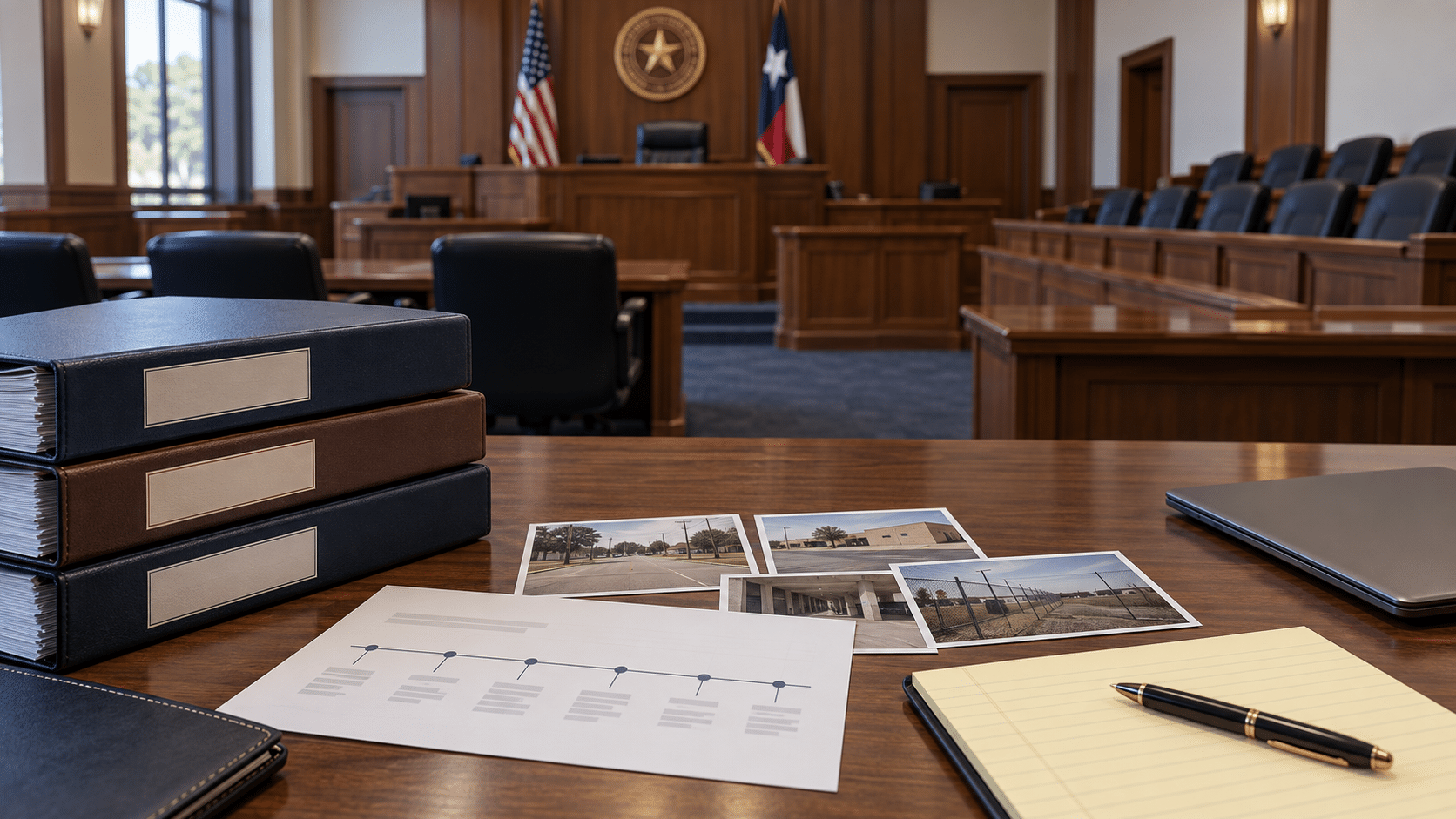
Preparing the request before the charge is read
I would keep a record during trial of evidence relevant to each possible lesser offense. That includes evidence offered by the prosecution. Waiting until the charge conference to look for the supporting testimony makes the task harder.
If the judge refused the request, I would want the record to show what counsel asked for and the basis for it. Preservation rules govern what needs to be done and when. That is work to address in court, while the opportunity exists, rather than leave for a later conversation about an appeal.
What a lesser offense would mean for the client
An instruction gives the jury a legally supported option; it does not guarantee a verdict or a particular sentence. Counsel should explain the proposed offense, its punishment consequences and how the request fits the defense being presented.
I would have that discussion with the client using the actual evidence. The decision should not be driven by an assumption that jurors will choose whichever option sounds like a compromise. They must apply the law in the charge to the proof before them.
A family member might remember a recording that counsel has not seen. Tell the lawyer where to find it. Even if it seems helpful, do not approach a witness with a suggested version of events. Counsel needs an accurate account to assess the instruction issue.
Legal sources
Texas Code of Criminal Procedure, Article 37.09.
Texas Penal Code Chapter 19 and Section 6.03.
General information about Texas law, not legal advice for a particular case. Reading this article does not create an attorney-client relationship.